Tragedies of the Afghan war
Dec 20, 2019 15:37 UTC
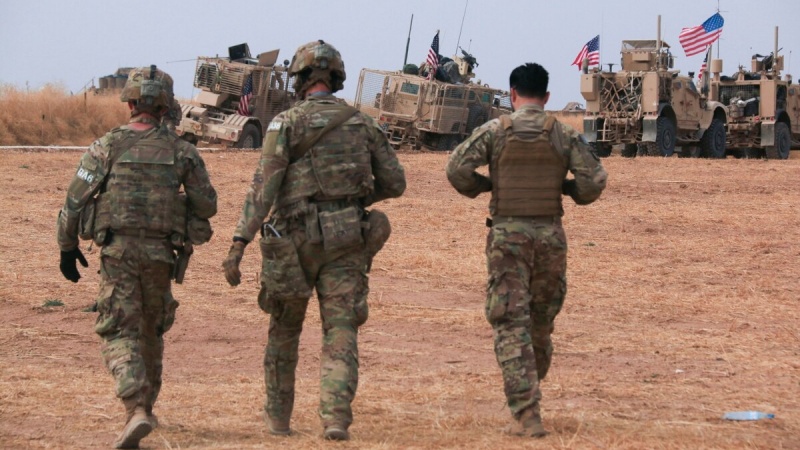
Previously classified memos dubbed the “Afghanistan Papers” containing 2,000 pages of interviews with senior US officials and others directly involved in the war effort have now revealed how public perceptions on the war were constructed and fed to the American people in a bid to hide the dark side of this misadventure.
Here we present you an article titled, “Tragedies of the Afghan war”, by Indian political analyst, Dr Manoj Kumar Mishra.
According to statistics put out by several reports, the protracted war has taken huge toll on human lives, both military personnel and civilians, while continuing to dry up the American Treasury. Going by US Defense Department statistics, more than 2,300 US troops have died in the conflict while 20,589 returned home wounded. The US invasion continues to take lives of civilians apart from frequent tragic killings of Afghan security personnel.
Meanwhile, about a trillion dollars have been spent despite the fact that the US had to spend far more on military operations in Afghanistan than it did on reconstruction, humanitarian aid, economic assistance and training of Afghan security forces (capacity-building exercises) and was still unable to find military solutions to the Afghan predicament.
Interventions can be successful in hypothetical cases where the polarization between the ruler (the government) and the ruled (masses) is more or less complete and the ousted regime’s ability to secure mass support and challenge the intervener is close to non-existent. However, defeating the Taliban on Afghan soil was a difficult proposition considering the ethnic divisions and entrenched religious values in the society.
The Americans’ hubris and belief in the superiority of their military capabilities blinded them to the complexities of asymmetric warfare in a different and complex cultural and geographical situation. Support from Tajik and Uzbek warlords was not sufficient to defeat the Taliban, who hailed from and lived with the masses from the predominant ethnic community – the Pashtuns.
However, what is missing from the documents is that the botched war efforts were also part of the American drive to defend and promote its interests in the Central Asian region using Afghanistan as bridge, the geopolitical importance of which was recognized in reports of independent agencies and by the US Congress throughout 1990s. The US was on the lookout for an overarching threat based on which it could validate its military actions, form alliances and fulfill its strategic objectives by taking advantage of its superior military force.
Hence the desire to have a foothold in Afghanistan dumped logic and ground realities as well as superseding international norms. The move to uproot al-Qaeda quickly turned into a move to change the regime and then into a drive to obliterate the Taliban.
The US resorted to pre-emptive strikes against the Taliban and these attacks can be self-serving and actions against groups undermine territorial integrity of states within which such groups operate. Military operations against such groups foreclose the policing and extradition options on which international law is based.
There was not even anyone to decide if there was sufficient evidence of state involvement in harboring perpetrators of the terrorist act and, more important, the question remained unanswered as to whether the Taliban had the ability to deliver the mastermind of 9/11 to the US. If the enemy is no longer an opposing state and its people but a regime or leadership, then bombs will not hit the “enemy” but innocent civilians. Deaths of civilians continued to erode support for the American mission.
Difficult terrain, porous boundaries, and difficulty in understanding native peoples’ languages and cultural dissimilarities have impeded the American fight against the Taliban. In a conventional war the opponent has a regular army, but there is no identifiable enemy of such a kind in asymmetric warfare. They mingle with civilians and they can even enter the territory of some other states from where they can wage war.
The difficulties in the counterinsurgency operations in Afghanistan revealed that the US Army embraces a big-war paradigm. US president Barack Obama replaced the counterterrorism strategy of the Bush era with a counterinsurgency strategy (COIN) by inducting more troops to the Afghan theater and focusing on capacity-building of Afghan security forces. However, such strategies were not successful, as the Afghan government, propped up by external forces, was unable to muster unalloyed loyalty from its security personnel.
America’s initial reliance on warlords to fight al-Qaeda and Taliban forces and their accommodation into power structures could not take the US strategy to the local and grassroots level. The US applied a top-down approach to security and development without taking sufficient account of rural and tribal peoples’ interests.
Some experts ascribed the weakening of Afghan state institutions to the economic agenda of the intervening powers. The Afghan state has been conceived more as an enabler than a provider of economic growth. International aid was tied to the global private sector, which was entrusted with the task of reconstruction, and this kept the state overly dependent on external financial support.
Furthermore, the Americans tied aid to the purchase of US-sourced products and services, and a full 70% of US aid was made conditional upon US goods and services being purchased or employed, as Tim Bird and Alex Marshall relate in their 2011 book Afghanistan: How the West Lost Its Way.
A recent World Bank report titled “Financing Peace” points to the extent of external support that Afghanistan will need even after a peace settlement with the Taliban. It warns that the country would still require financial assistance at near current levels, as much as US$7 billion a year for several years to come, to be able to sustain its most basic services.
SS
Tags