How war targets the young
Dec 22, 2019 13:15 UTC
“At home or abroad, whether we know it or not, in the post-9/11 years, war has targeted the young. It’s not a pretty sight”, says Andrea Mazzarino, co-founder of Brown University’s Costs of War Project.
She is the co-editor of the new book War and Health: The Medical Consequences of the Wars in Iraq and Afghanistan.
This article has been published in the Truthout website, under the heading: How War Targets the Young.
One day in October 2001, shortly after the U.S. invaded Afghanistan, I stood at the front of a private high school classroom. I was a new social studies teacher. Once a student raised her hand and said, in evident confusion, “I don’t know why, but I’m scared.” And we had our first meaningful conversation since that fateful September day.
One after another, my students confessed that they didn’t know what the response to those attacks — already dubbed by the Bush administration a “Global War on Terror” — would mean for all of us or what Washington’s goals of “liberation” in distant lands would mean for their futures.
As the recent explosive report in the Washington Post on the lies our top military and political leaders have offered us ever since about “progress” in the Afghan War made all too clear, none of us could really have had a clue, nor did we even know what questions to ask then.
Eighteen years later, the war on terror has spread to some 80 countries around the world, a nightmare far worse than anything those children or I could have imagined on that long-ago day.
As a military spouse and a therapist-in-training, specializing in the effects of war on health, I’ve lived in several cities with a high concentration of veterans and military families, as well as refugee and migrant families from countries across five continents, many deeply affected by those still spreading armed conflicts (or even older ones in Central America that the U.S. had been involved in launching in the previous century).
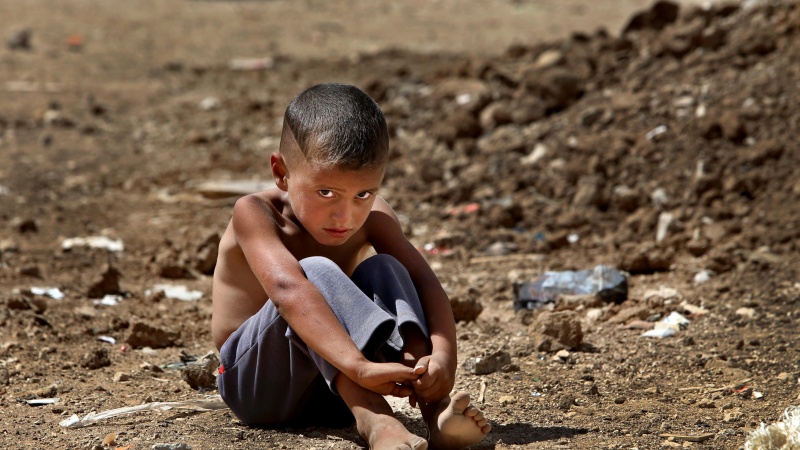
It’s clear to me that, at least for the children of such groups, the never-ending fighting thousands of miles away can affect their concentration levels, the ways they solve problems with peers at school, and how their own parents respond to interpersonal conflict in their homes.
I’ve watched more than once as such kids flinch at the everyday sound of an airplane overhead or sirens from an ambulance passing by while I’m trying to troubleshoot their concentration problems with them.
At such times, they explain to me that similar trigger moments, unexpected reminders of violence in their home countries in sub-Saharan Africa, Central Asia, or Central America, sometimes keep them from concentrating at school or even from effectively discussing their problems with me in therapy.
Such conversations drive home a point that merited only a few brief references in the recently published book of essays, Afghanistan, that Catherine Lutz and I — both of us from Brown University’s Costs of War Project — put together. The truth is, though, that the subject of the hidden costs of war to the young undoubtedly deserves a volume all its own, a reminder of how America’s wars and other conflicts, barely seen by most of us, are nonetheless deeply felt, even here, in all sorts of unnerving ways.
In a powerful piece on heroin use and survival among Afghan war widows, for instance, anthropologist Anila Daulatzai tells how an eight-year-old Afghan boy died in a bomb blast as he walked to school.
Such senseless violence prompted his mother (and other similarly grieving wives and mothers) to start using heroin as a coping mechanism. Similarly, anthropologists Jean Scandlyn and Sarah Hautzinger note how our country’s post-9/11 wars have affected the study habits of the children of military families even here on the home front.
Some miss school to prepare for parental deployment or homecoming. Some struggle to keep up as they assume some of the household responsibilities of the missing parent.
Others are even hospitalized in response to depression brought on by what could be thought of as deployment stress — simply knowing that a parent is gone and might be in danger.
I’ve seen the way armed violence many thousands of miles away affects the ability of kids to study and that’s obviously so much more true of the young in actual war zones (even when the option of school exists, which in the chaos of war, disruption, and displacement it often doesn’t).
I’ve heard it in the voices of the children I’ve met who tell me that they remember vividly their inability to study because they were afraid that, in the very schools where their minds were to be molded, at any moment their bodies might be attacked or even destroyed.
As my colleagues Catherine Lutz, Neta Crawford, and I learned when we started the Costs of War Project in 2011, it’s pretty hard to quantify the indirect human costs of war, particularly those that manifest themselves in mental illness or chronic injuries among soldiers, civilians, and their families, in people eternally grieving or struggling to adjust to worlds that have often been turned upside down.
Partly, this is because those in power who decide to go to war give little or no thought to what attacking another country, no less sending your troops in as occupying forces for years on end, will mean for everyday life in the war zones to come.
In addition, once such wars have begun, they do a terrible job of keeping track of those costs.
In June 2016, for instance, I spoke with a Human Rights Watch analyst who was doing research on what the Saudi-led, American-backed invasion of Yemen. As of then, more than three quarters of that country’s schools had already been closed due to insecurity. The consequences of bombings have also been immense and intense.
In Yemen in 2015, 1.85 million children could not take their final school exams. That’s a population larger than Philadelphia’s and that was just in the first year of an American-supported invasion that would only get worse (and worse and worse).
Of course, when it comes to attacks on education, bombs dropping on schools barely scratch the surface of the damage caused by this century’s forever wars.
The May 2018 report that resulted from our joint efforts found that ever more targeted and indiscriminate attacks on schools, teachers, and students had occurred between 2013 and 2017: 12,700 attacks hurting more than 21,000 students and teachers in at least 70 countries.
When it came to Afghanistan, my high school students were right to be skeptical about or pay little attention to the optimism of that New York Times article I showed them.
What numbers we have are not encouraging: as of 2018, 8% of Afghan boys and 22% of Afghan girls at the primary level, and 2% of boys and 10% of girls at the secondary level identified insecurity as the reason they did not attend school.
Because so much of the damage to education is overlooked when states wage war, it can be hard to get the full story of just how many young people are being killed, hurt, or prevented from studying due to attacks on schools.
When I worked on the GCPEA report, our research methods were limited to painstaking surveys of news reports from around the world and interviews with the few intrepid activists willing to speak out on the subject, often despite fearing for their own lives.
We struggled to cobble together as full a picture as possible of how many young people have been attacked, had died, had been injured, and how many children simply couldn’t study in the aftermath of such violence.
But given the inability to discover so much, the full consequences of America’s forever wars across significant parts of the globe remain only partially known even to those, like us at the Costs of War Project, who focus on the subject much of the time.
It’s common to think that physical violence is the right way to solve problems and that militarized language and tactics are reasonable ways to deal with and discipline children, especially in schools.
And don’t forget that violence, however you explain it, is now a remarkably regular part of school life and the school experience, or at least fears and preparation for it are.
Even as the U.S. has spent trillions of dollars to fight terror targeting civilians at home and abroad, gun violence, including suicides, homicides, police violence, and “mass shootings” (especially in schools), has cost us exponentially more lives. Yet according to the Atlantic, we’ve invested only the tiniest fraction of the money we’ve spent prosecuting the War on Terror in protecting students in America’s schools (roughly $22 million annually).
Still, the effects of mass shootings and the ways we prepare for them have changed school life in grim ways, normalizing the very idea of armed violence.
Recently, I shushed my two preschool-age children while I took a work call, only to hear one of them say to the other, “Let’s play lockdown! The shooters are coming!”
They then crawled behind an armchair and lay flat on their stomachs like little boot camp trainees, their eyes wide as they watched me. In other words, somehow they’ve already absorbed the lockdown school mindset of the moment, those grim preparations for mass shooters, and they’ve yet to arrive in their first classroom.
As someone who came of age when the Columbine massacre took place, a time when we assumed that it was an isolated incident perpetrated by mentally disturbed young men, I regularly wonder why we aren’t doing more to address the ways in which war and other forms of mass violence continue to affect the hearts and minds of students here and around the world.
Isn’t it time to work to change a culture in which the young spend too much of their school and homework time focused on violence rather than on the subjects they came to study?
And, of course, our government is not shy about directly encouraging kids to fight wars.
In 2019, for example, the Army set aside some $700 million for recruiting, though it’s not clear how much of this is spent to recruit in schools.
Data suggests that schools with a high percentage of lower-income students are visited far more frequently by recruiters than more affluent schools.
According to the American Public Health Association, most new U.S. military recruits are in late adolescence and less able to handle high levels of stress, more likely to take uncalculated risks, and more likely to suffer long-term injury and mental health problems as a result of their military service.
At home or abroad, whether we know it or not, in the post-9/11 years, war has targeted the young. It’s not a pretty sight.
AE/SS
Tags