Bushfires are a catastrophe for Australia
Jan 05, 2020 07:59 UTC
As a society Australians should admit that their current policy, operational, knowledge-gathering and research capacity is inadequate to deal with such a new, fiery world.
How do Australians in their most populated regions live in a future, defined by heat, drought, powerful wind and lightning storms that lead to inevitable uncontrolled fires? The answers must lie in the intersection of the resilience of human communities, Australians’ experience and love of place, with the natural environment. Every major bushfire season in Australia has been followed by inquiries and their recommendations that have led, haltingly, to improved capacity to fight and co-exist with fire threats. However there are a plethora of recommendations that have failed to gain traction in the complex administrative and political ecosystems that reinforce the status quo.
The following is an article concerning this issue authored jointly by ‘Ross Bradstock' the Director at the Center for Environmental Risk Management of Bushfires at the University of Wollongong, and ‘David Bowman’, the professor of pyrogeography and fire science, and the Director of the Fire Center Research Hub at the University of Tasmania, entitled: “Bushfires are a catastrophe for Australia.” The article was published in ‘The Guardian’.
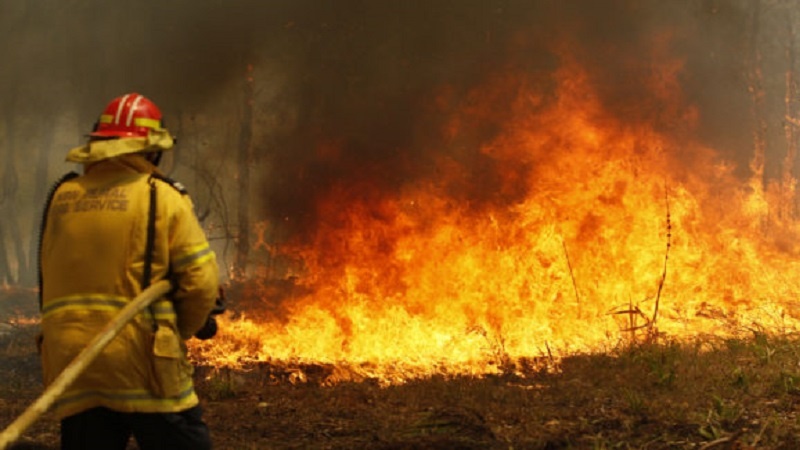
The fire situation in eastern Australia continues to rapidly escalate.
At this stage we cannot predict when this will come to an end, but with losses of lives and property mounting on the South Coast of NSW, Eastern Victoria, South Australia, Southwestern WA and Tasmania, Australians now have a nationally significant catastrophe that affects city and country alike.
The magnitude of these fires alone (about five million hectares and rapidly rising), apart from their human and environmental consequences, simply shows Australian people that they now confront a new, more flammable world: A coupling of people, ecosystems and fire that is now irrevocably transformed.
As a society Australians should admit that their current policy, operational, knowledge-gathering and research capacity is inadequate to deal with such a new, fiery world.
How do Australians in their most populated regions live in a future, defined by heat, drought, powerful wind and lightning storms that lead to inevitable uncontrolled fires?
The answers must lie in the intersection of the resilience of human communities, Australians’ experience and love of place, with the natural environment.
Yet understanding this intersection demands resolving the various contribution of climate change, land management and community preparation and resilience.
How many lives, properties, threatened species, ecosystems and their services, did current management and response capacity actually save? What was the return on human and financial investment in fire preparation and emergency? Are existing administrative arrangements in firefighting and emergency management appropriate? What is the right balance between community/individual responsibility vs. centralized command and control?
What is the role and sustainable capacity of volunteer fire management? What can indigenous fire knowledge bring to bear in stem these blazes? How can biodiversity and ecosystem services, like water and carbon storage, be protected?
Comprehensive answers to these questions are not simple to acquire, because of the interlocking nature of the process involved. But to effectively adapt to the challenges the future compels Australian people to deal with them on a scale never attempted before.
The temptation to make sense of this unprecedented crisis, and identify a way forward, is to repeat the same model of inquiry that has played out over the last century.
Every major bushfire season in Australia has been followed by inquiries and their recommendations that have led, haltingly, to improved capacity to fight and co-exist with fire threats.
However there are a plethora of recommendations that have failed to gain traction in the complex administrative and political ecosystems that reinforce the status quo.
For instance, while the Stretton Royal Commission, that followed the 1939 fires in Victoria, established the foundations of modern, organized fire management capacity, its successor, the 2009 Victorian Bushfires Royal Commission has had a lesser impact.
Critical recommendations concerning planning, land use and management lie discarded after failure of implementation. As with most inquiries, the feasibility, cost-effectiveness and capacity of governments and citizens to implement its recommendations were beyond both the scope, resources and timeframe of the last Royal Commission.
The legacy of a State-centric approach to land, fire and emergency management, so often viewed as a strength by many abroad is now a conspicuous weakness when it comes to the challenges of a world transformed.
While laudable initiatives such as the post season summit proposed by ex-fire chiefs or politicians have been proposed, these will be inadequate to derive viable solutions until basic questions about the bushfire crisis are thoroughly explored and answered.
The scope and scale of the ongoing national catastrophe requires a significant and non-partisan investments in national capacity to research, investigate, understand and innovate to meet the challenges ahead.
There are no short-term fixes or answers to be had in response to the challenge. Setting out to protecting old orthodoxies, and thereby eschewing more innovative solutions, will lead Australians down a well-trodden path that is incapable of comprehending and adapting to their new circumstances.
There needs to be robust and evidence-based debate, encouragement for trying new approaches, and fostering diversity of opinion, outlook and experience.
There is an urgent need to develop a nationally coordinated, but not centrally controlled, approach to resolving the key questions posed above.
This initiative should fully harness the intellectual capacity of Australians’ management, research and training institutions, focusing their immense technological capacity for analysis of the fire, human, climate and environment nexus.
Without such an approach unprecedented amounts of information yielded by the events of 2019/20 will evaporate, the hard lessons will be skipped, and the vulnerability to another fire crisis will remain.
Simply stated, as a nation Australian people are being transformed by drought, heat and fire, to adapt them must transform their understanding of these fundamentals, in order to plan, cope and live in a more flammable world.
ME
Tags