Imam Ali (AS), the Barometer of Belief
Mar 31, 2018 04:08 UTC
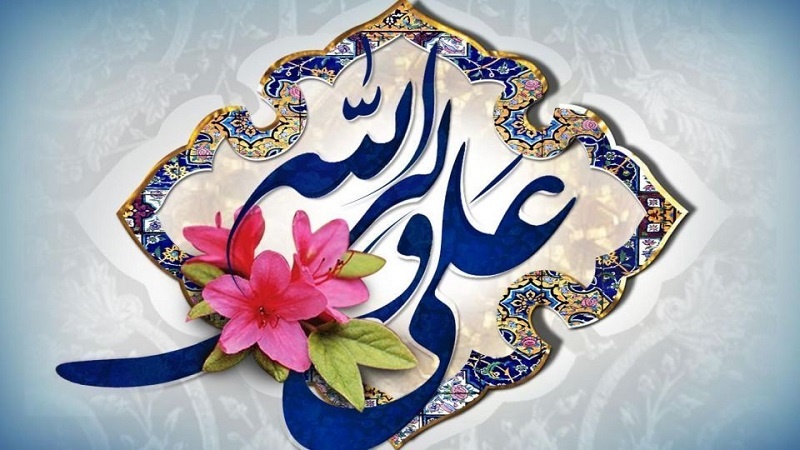
Heartiest congratulations to you all on a very special day. Today is the auspicious 13th of Rajab, the day on which the holy Ka’ba, the symbolic house of God the Unseen but Omnipresent, came alive exactly a millennium, four centuries and sixty-two lunar years ago with the birth in its holiest center of the person who happens to be the second of the most perfect-ever creations of the Lord Most High.
In other words, today is the blessed birthday of the man, every single moment of whose 63-year life span was spent in the service of the One and Only Creator of the universe, as a mirror of divine attributes for the guidance of mankind.
To be more precise, the 13th Rajab is the day of coming into the transient world of the Barometer of Belief, the Fulcrum of Faith, the Paragon of Piety, the Paradigm of Patience, the Key of Knowledge, the Wizard of Wisdom, the Touchstone of Truth, the Criterion of Courage, the Model of Magnanimity, the Mirror of Munificence, the Epitome of Eloquence, and the Judicator of Justice, Imam Ali ibn Abi Taleb (AS), the Divinely-Designated Vicegerent of the Almighty’s Last and Greatest Messenger to all mankind, Prophet Mohammad (blessings of God upon him and his progeny).
Before we present you an exclusive feature in this regard, listen to ayah 96 of Surah Aal-e Imran, in which Allah Almighty informs us of the significance of the Holy Ka’ba:
“Indeed the First House to be set up for mankind is the one at Bakkah; blessed and a guidance for all nations.”
Built by the Father of mankind, Adam, as the first-ever structure on Planet Earth in order to serve as the focal point of worship of the One and Only Creator, the Ka’ba or the cube-shaped edifice in Mecca, had suffered damage during the great deluge of the days of Prophet Noah and lay in dilapidated state for several centuries until the All-Wise God ordered Prophet Abraham and his firstborn son, Prophet Ishmael, to rebuild this supreme symbol of monotheism. The Lord Most High was fully aware that pagan Arabs would pollute it with idols, thereby requiring its thorough cleansing by the Last and Greatest Messenger, Prophet Muhammad (SAWA), with the assistance of his cousin, son-in-law, and First Infallible Heir, Imam Ali ibn Abi Taleb (AS), who will deliver the final blow to idolatry in Mecca by pulling down from atop the Ka’ba the chief Arab deity, Hubal.
“And say (O Mohammad): The truth has come and falsehood has vanished; indeed falsehood is bound to vanish.”
These words of Almighty Allah, as stated in ayah 81 of Surah al-Isra’, were on the lips of the Seal of Messengers in 8 AH at the surrender of Mecca when he raised on his shoulders the Commander of the Faithful for the final blow to idolatry at the First House built on Planet Earth in which his dearest cousin was born three decades earlier on the 13th of Rajab – the only person ever to be born in the Most Holy of Holies.
It would be repetitive to recount the miraculous parting of a section of the wall of the Holy Ka’ba for the monotheist lady of the Hashemite Clan, Fatema bint Assad, and the miraculously closing of the same as she stepped inside to the utter bewilderment of the pagan Arabs engaged in idol-worship around the supreme sanctuary of monotheism.
Three days later the same miraculous scenario was repeated when the Lady who had raised as her own son the orphaned nephew of her monotheist husband Abu Taleb, stepped outside with a radiant boy in her arms, while nearby stood in expectation the newborn’s 30-year old first cousin, along with the infant’s father.
The Prophet, who had not yet declared his universal mission of Islam, stepped forward to take his first cousin in his arms from his aunt and virtual mother.
Only God knows what transpired between the two cousins when their eyes met each other with smiles on their lips, but definitely, Divine Providence had decided on the final cleansing of the Holy Ka’ba by these two illustrious offspring of Abraham.
No wonder the Prophet used to say: “O Ali your position is like that of the Ka’ba.” (Kunooz al-Haqa’eq)
What could be written of a person, the praise of whom the celestial angels chant and the writing of whose merits exhausts ink and paper!
Born in the House of God, and martyred while in communion with his Creator in the Great Mosque of Kufa (also a House of God), with his face turned towards that very site of his birth (the Holy Ka`ba), every single moment of the 63-year life of Imam Ali (AS) in the mortal world, was dedicated to and spent in the service of Islam.
To quote his own words: “When I was a young child, the Prophet took care of me. He would bring me to his chest and I would sleep in his bed, so close to him that I could even smell his scent. He would chew food for me and then feed me with it. He found no lies in my speech, nor any shortcomings in my actions.”
As a boy, the Imam stood beside his mentor, chasing away the kids who used to throw stones at the Prophet. He endured in the Gorge of Abu Taleb the three-year siege of the Bani Hashem Clan imposed by the infidels of Mecca, risking his life to procure grains for the besieged Muslim community.
When plots were hatched to extinguish the light of Prophethood, the brave Ali (AS), volunteered to sleep on his cousin’s bed, so that the latter could migrate to Medina undetected. The reward for his self-sacrifice to which Islam will remain ever-indebted, came in the form of the ayah 207 of Surah al-Baqarah, which reads: “Among men, is he, who sells his soul for the pleasure of Allah" (Holy Qur’an
Ameer al-Mo’mineen and Imam al-Muttaqeen, which means Commander of the True Believers and Leader of the Godwary, volumes have been written on the merits of Imam Ali (AS) by eminent scholars in every age and era. The famous 11th century CE Sunni historian Ibn Asaker writes in his Tarikh Damishq that the Holy Qur’an contains not less than 300 ayahs revealed by God on the merits of Imam Ali (AS) –much more than that of any other companion of the Prophet.
The Mu’tazalite doctor of law, Ibn Abi l-Hadid, writes in his preface to his voluminous commentary on the Nahj al-Balagha or Highway of Eloquence, which is the collection of the sermons, letters and aphorisms of Imam Ali (AS):
“The physical prowess of Imam Ali (AS) was well-known. He was the one who lifted the gate of (the fortress of) Khaybar, while a whole group of the troops could not take it back to its place. He was the one who threw down the (huge) idol of Hubal from the top of the Ka'ba to the ground. He was the one who lifted up a huge rock with his hands, while a spring gushed forth beneath it.”
Ibn Abi’l-Hadid further writes: “What can I say about the man whose enemies acknowledged his virtues since they could not deny or hide them. Indeed, the Banu Omayya seized power of the Islamic lands from the east to the west, and tried to extinguish the light of the glory of Imam Ali (AS), using any means and tricks. They fabricated many hadiths about cursing him and they cursed him from all pulpits. They not only threatened his admirers, but they killed his followers, and banned them from quoting any hadith that implied his virtues or promoted his name. They even banned naming children after him. However, all of these attempts resulted in nothing except the exaltation of his glory. He was like a musk: the more of it that is secreted, the more it sweetens the air… He is the origin of every human virtue and excellence; to whom every school and group trace back their origin and find honour. He is the origin of all excellences and surpasses all others and is the pioneer of all arenas.”
Imam Ali (AS), as the epitome of justice continues to transcend history and all historical developments, and has left lasting statements of guidance for all humanity, whether Muslim or not, as is evident by the tribute paid to him by the Arab Christian scholar George Jordaq, who has written several volumes, comparing the Imam’s excellence over philosophers beginning from the Greeks and up to the French Revolution, and calling him “The Voice of Human Justice”.
A paragraph from this book reads:
“(Imam) Ali (AS) formulated such firm rules and presented such solid views for the rights of the human beings and the welfare of the human society, that their roots penetrate into the depths of the earth and their branches extend up to the heavens. All the social sciences which are prevalent at present mostly confirm these views and principles. Although these modern social sciences may be given many names, and may be presented in various forms, their object is one and one only that the human being should be protected from oppression and there should be formed a society which should protect human rights in a better way - a society in which human dignity should be respected and the freedom of word and action should be safe to such an extent that none should be hurt.
“(Imam) Ali (AS) had clearly understood that it will be very dangerous to divide the people into two classes and to prefer one of them to the other. This will retard the intellects, create malice in the spirits, and introduce oppression and injustice in the judgments and transactions, and all sorts of mischiefs and corruptions will appear. The result will be that ambition for life will die and the people will become pessimistic and will entertain ill-will towards one another. Consequently the society will be ruined. So long as these two classes exist in a society a conflict between them is inevitable and it will involve the loss of many lives.”
To end this brief radio programme, here is a passage from the famous epistle of Imam Ali (AS) to his governor of the then Christian-majority Egypt, Malek Ashtar, on the norms of good government:
“Habituate your heart to mercy for your subjects and to affection and kindness for them. Do not stand over them like greedy beasts who feel as though they should devour them. They (your subjects) are of two kinds: either your brother in religion or like you in creation.”
We once again congratulate our listeners on the birthday of the person who when he once saw an old Christian begging on the streets, had pension fixed for him from the public treasury after chiding officials for leaving him destitute after he had worked all his life. Before we bid you goodbye, here is a wonderful saying from Imam Ali (AS) which shows his absolute cognizance of God Almighty:
“By Allah, even if I am given all the domains of the seven (stars) with all that exists under the skies in order that I may disobey Allah to the extent of snatching one grain of barley from an ant I would not do it. For me your world is lighter than the leaf in the mouth of a locust that is chewing it. What has Ali to do with bounties that will pass away and pleasures that will not last? We do seek protection of Allah from the slip of wisdom and the evils of mistakes, and from Him we seek succor.”
AS/ME
Tags