How Donald Trump’s trade wars could lead to a Great Depression
Jun 24, 2018 07:27 UTC
The article you are about to hear has been authored by Nomi Prins who is a journalist and TV and radio commentator.
Leaders are routinely confronted with philosophical dilemmas. Here’s a classic one for the Trumptopian times: If you make enemies out of your friends and friends out of your enemies, where does that leave you? What does winning (or losing) really look like? Is a world in which walls of every sort encircle America’s borders a goal worth seeking? And what would be left in a future fragmented international economic system marked by tit-for-tat tariffs and travel restrictions? Ultimately, how will such a world affect regular people? Let’s cut through all of this for the moment and ask one crucial question about the present cult-of-personality era in American politics: Other than accumulating more wealth and influence for himself, his children, and the Trump family empire, what’s Donald J. Trump’s end game as president?
In fact, Trump is already making the world a less stable, less affordable, and more fear-driven place. In the end, it’s even possible that, despite the upbeat economic news of the moment, he could almost singlehandedly smash as he has many of his own business ventures. Donald Trump has lent remarkable new meaning to the old phrase “the imperial presidency.” The members of his administration, largely a set of aging white men, either conform to his erratic wishes or get fired. Now, he has begun running the country’s foreign policy in the same personalized, you’re-fired style. From the moment he hit the Oval Office, he’s made it clear at home and abroad that it’s his way or the highway. If only, of course, it really was that simple. What he will learn, if “learning process” and “President Trump” can even occupy the same sentence, is that “firing” Canada, the European Union (EU), or for that matter China has a cost.
What the American working and the middle classes will see (sooner than anyone imagines) is that actions of his sort have unexpected global consequences. They could cost the US and the rest of the world big time. If he were indeed emperor and his subjects (that would be the American people) grasped where his policies might be leading, they would be preparing a revolt. In the end, they — again, that’s the American people — will be the ones paying the price in this global chess match.
So far, President Trump has only taken America out of trade deals or threatened to do so if other countries don’t behave in a way that satisfies him. On his third day in the White House, he honored his campaign promise to remove the US from the Trans Pacific Partnership, a decision that opened space for US allies and competitors, China in particular, to negotiate deals without the US. Since that grand exit, there has, in fact, been a boom in side deals involving China and other Pacific rim countries that has weakened, not strengthened, Washington’s global bargaining position. Meanwhile, the Trump administration has engaged in a barrage of NAFTA-baiting that is isolating the US from its regional partners such as Canada and Mexico.
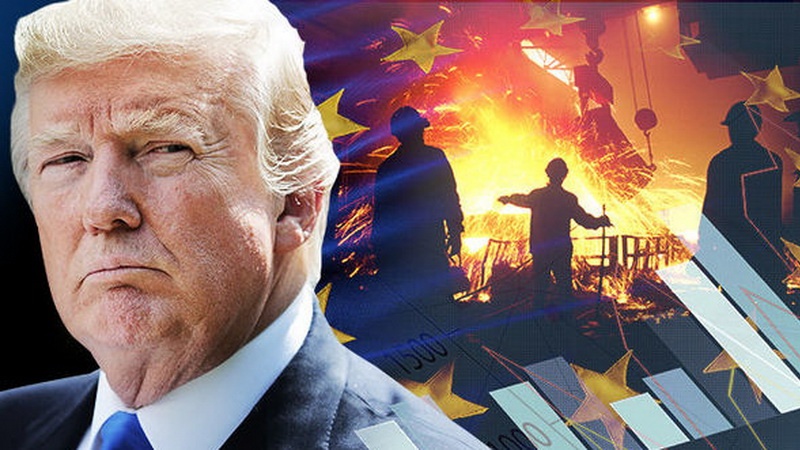
In the past four months, Trump has imposed tariffs, exempting certain countries, only to re-impose them at his whim. At the heart of this approach, however, lies a certain global madness, for he now is sparking a set of trade wars that could, in the end, cost millions of American jobs.
In June, President Trump ordered that a promised 25% tariff on $50 billion worth of imported goods from China also be imposed. In response, the Chinese, like the Europeans, the Canadians, and the Mexicans, immediately promised a massive response in kind. Trump countered by threatening another $200 billion in tariffs against China. In the meantime, the White House is targeting its initial moves largely against products related to that country’s “Made in China 2025” initiative, the Chinese government’s strategic plan aimed at making it a major competitor in advanced industries and manufacturing.
Meanwhile, Mexico began adopting retaliatory tariffs on American imports. Although it has a far smaller economy than the US, it’s still the second largest importer of US products, buying a whopping $277 billion of them last year. Only Canada buys more.
As the G7 summit showed, the Trump administration is increasingly isolating itself from its allies in palpable ways and, in the process, significantly impairing the country’s negotiating power. If you combine the economies of what might now be thought of as the G6 and add in the rest of the EU, its economic power is collectively larger than that of the United States. Under the circumstances, even a small diversion of trade thanks to Trump-induced tariff wars could have costly consequences. Trump first suggested the possibility of wiping out all tariffs and trade restrictions between the US and the rest of the G7, a bluff met with a healthy dose of skepticism. Before he left for his meeting with North Korean leader Kim Jong Un in Singapore, he even suggested that the G7 leaders “consider removing every single tariff or trade barrier on American goods.” In return, he claimed he would do the same “for products from their countries.” As it turned out, however, that wasn’t actually a venture into economic diplomacy, just the carrot before the stick, and even it was tied to lingering threats of severe penalties.
The current incipient trade war was actually launched by the Trump administration in March in the name of American “national security.” What should have been highlighted, however, was the possible “national insecurity” in which it placed the US future. After all, a similar isolationist stance in the 1920s and the subsequent market crash of 1929 sparked the global Great Depression, opening the way for the utter devastation of World War II.
European Union countries were incredulous when Trump insisted, as he had many times before, that the “US is a victim of unfair trade practices,” citing the country’s trade deficits, especially with Germany and China. At the G7 summit, European leaders did their best to explain to him that his country isn’t actually being treated unfairly. As French President Emmanuel Macron explained, “France runs trade deficits with Germany and the UK on manufactured goods, even though all three countries are part of the EU single market and have zero tariffs between them.”
Having agreed to sign on to a post-summit joint statement, the president suddenly opted out while on his flight to Singapore, leaving his allies in the lurch and subsequently slamming the Canadian prime minister as “very dishonest” and “weak”.
The fallout domestically from the coming trade wars could be horrific if Trump truly makes good on his promises and refuses to back down, while the countries he’s attacking ratchet up their own responses, whether in terms of tariffs or simply a refusal to buy American goods. According to the US Chamber of Commerce, up to 2.6 million American jobs could be threatened if, in the process, the US also withdraws from NAFTA. Even American CEOs are now running scared of the CEO-in-chief. A recent survey conducted by the Business Roundtable lobby group revealed that their “economic outlook index” had declined this past quarter from a record high, the first drop in two years. According to the report, nearly two-thirds of the CEOs surveyed considered trade policy a “serious risk.” Rather than planning future corporate hiring sprees, their fears of future trade wars actually seem to be curtailing job-expansion plans.
European leaders at the G7 summit admitted that, despite their own role in escalating global trade tensions, the coming wars “would hurt everyone.” And therein lies the danger and the disconnect. Thanks largely to Donald Trump, these leaders could now proceed to destroy trade relationships, knowing full well that the results will hurt their workers and damage the global economy.
When trade wars escalate and geopolitical tensions rise, economies can be badly damaged, leading to a vicious cycle of aggressive responses. And here’s the remarkable thing about the power of America’s imperial presidency in 2018: Donald Trump could unilaterally slow, alter, or under certain circumstances even shut down various elements of global trade — and if he manages to do so, there will be a price to pay in jobs and economic stability.
Catalyzed by tweets, denunciations, insults, and the tariff-first shots of his administration, the US allies will undoubtedly try to trade more with each other to close gaps that his trade wars open. Ultimately, that will hurt the US and its workers, especially Trump’s base. For instance, German carmaker BMW, Japanese carmaker Toyota, and other foreign car companies employ 130,000 people in the United States. If, in response to new tariffs on their products, they were to begin moving their operations to France or Mexico in retaliation, it’s American workers who would lose out. But make no mistake: American allies, who rely on the staggeringly powerful US market, will lose out, too. Weighed down by tariffs, their products will become less competitive which is what Trump wants. However, that won’t necessarily mean the end of trade deficits; it could just mean less trade everywhere, a situation that should bring to mind the global depression of the 1930s. And if you think Donald Trump is already a threat to world stability, imagine what might happen after years of economic duress.
The global economic system first put in place after World War II was no longer working particularly well even before President Trump’s trade wars began. The problem now is that its flaws are being exacerbated. Once it becomes too expensive for certain companies to continue operating as their profits go to tariffs or tariffs deflect their customers elsewhere (or nowhere), one thing is certain: it will get worse.
AJ/SS
Tags