Trump hits out at China over North Korea
Sep 05, 2018 04:53 UTC
US President Trump again criticized China in a series of tweets, accusing Beijing of applying pressure to North Korea not to meet US demands to denuclearize. The verbal attack on China comes amid growing signs that negotiations over Pyongyang’s nuclear programs, initiated at a Singapore summit between Trump and North Korean leader Kim Jong-un in June, have stalled.
Trump’s tweets, which were designated as a White House statement, claimed that North Korea was “under tremendous pressure from China because of our trade disputes with the Chinese government.” It continued: “At the same time, we also know that China is providing North Korea with considerable aid, including money, fuel, fertilizer and various other commodities. This is not helpful!”
In other words, China, supposedly, is deliberately sabotaging Washington’s negotiations with Pyongyang in retaliation for the escalating US trade war measures against Beijing. Trump provided no proof to support the claim, nor any evidence that China was breaching UN sanctions on North Korea, which have blocked most of the country’s exports and placed limits, but not a complete ban, on its energy imports.
While lashing China, Trump declared that he believed “that his relationship with Kim Jong Un is a very good and warm one.” The ploy is an obvious one: by criticising Beijing rather than Pyongyang for stalled talks, the US president is seeking to drive a wedge between the two allies and encouraging North Korea to reorient more closely to the US.
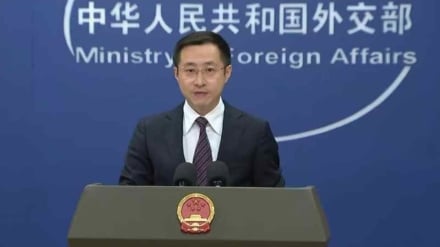
Chinese foreign ministry spokeswoman Hua Chunying responded to Trump’s allegations, branding them an “irresponsible distortion of facts and logic.” She called on the US to “honor its pledges and commitments and play a positive and constructive role in settling this issue, just like we Chinese people do.” She added that the US “should look to itself to find out what is wrong instead of shifting blame onto others.”
Trump has continued and escalated the Obama administration’s confrontational “pivot to Asia” aimed at isolating and undermining China, diplomatically, economically and militarily. His stance towards North Korea has veered erratically and recklessly—from threatening to “totally destroy” it last year, to declaring after the Singapore summit that it no longer posed a nuclear threat. Trump’s overriding aim is to draw North Korea out of China’s orbit and further isolate Beijing.
In his tweets last week, Trump used the same carrot-and-stick approach to joint US-South Korean military exercises that were suspended after the Singapore summit. Last Tuesday, US Defense Secretary James Mattis announced that the Pentagon had “no plans at this time to suspend any more exercises,” suggesting that the war games could resume. Pyongyang is understandably hostile to the drills, which are barely-disguised preparations for war against North Korea.
Trump’s statement appeared to contradict Mattis. He declared, “There is no reason at this time to be spending large amounts of money on joint US-South Korea war games.” That remark, however, was quickly followed by a threat saying: “Besides, the President can instantly start the joint exercises again with South Korea, and Japan, if he so chooses.”
The joint statement issued by Trump and Kim after their Singapore summit referred only in general terms to a commitment to “denuclearize the Korean Peninsula”—a phrase that is interpreted quite differently in Washington and Pyongyang. No concrete steps were announced.
Nevertheless, the Trump administration is placing pressure on North Korea to hand over its nuclear arsenal and dismantle its facilities prior to any concessions by the US. The American president cancelled the latest trip by US Secretary of State Mike Pompeo that was due to take place last week, claiming that North Korea had not done enough to denuclearize.
Pyongyang has halted its nuclear and missile testing and taken initial steps to dismantle a test site. However, it insists that further steps should be based on reciprocal moves by Washington. In particular, North Korea is pressing for a US declaration formally ending the 1950–53 Korean War that would pave the way for a peace treaty and an end to decades of isolation. The conflict concluded in 1953 with an armistice that halted the fighting but the two sides still remain technically at war.
Vox news service last week reported that Trump had made a commitment to Kim during their summit to formally announce an end to the war. Vox is an American news and opinion website owned by Vox Media. Citing two sources, it stated that “Trump promised the North Korean leader that he’d sign a peace declaration soon after they met.” Another source said that the US president had “made the same promise” to a top North Korean official Kim Yong-chol at the White House just days before the summit.
If that was the case, it would explain North Korea’s frustration with the failure of Trump to live up to his promises while placing further demands on it to denuclearize. Following Pompeo’s last trip to Pyongyang, the state-owned media attacked Washington’s “gangster-like demands” to give up its nuclear arsenal with nothing in return.
The Trump administration’s determination to keep up the pressure on North Korea is also cutting across efforts by South Korean President Moon Jae-in to improve relations with Pyongyang. The two countries have already announced that a peace declaration will be signed by the end of the year—a step that the US may block. Moon is due to hold another summit this month with North Korean leader Kim.
Last month, the US effectively sabotaged initial steps by two Koreas to re-establish a rail link between the countries. A joint field study that involved sending a train from Seoul through North Korea to Sinuiju on the Chinese border was blocked by the UN, better to read the US, command. In what amounted to a slap in the face to South Korea, this body, which is under US control, requested “more fidelity on the details of the proposed visit.”
At the same time, the Trump administration is increasingly under fire over North Korea at home from the Democrats and sections of the US media. In a scathing critique of the Trump-Kim summit, Leon Panetta, former defense secretary and CIA director under Obama, told ABC News that it was “all about show” and “doomed to failure from the beginning because there was never the preparatory work that has to be done prior to a summit meeting.” This domestic criticism of Trump is a component of the intense infighting in US ruling circles over the direction of foreign policy. However, the Trump administration is already acting as a warmongering and bullying apparatus itself, doing any shameless attempts in the way.
The danger is that the unravelling of negotiations with North Korea could rapidly plunge the Korean Peninsula back into a confrontation and a precipitous slide towards war.
By freelance writer and political observer Peter Symonds
EA/ME
Tags