Larijani: West has tied global relations to power
-
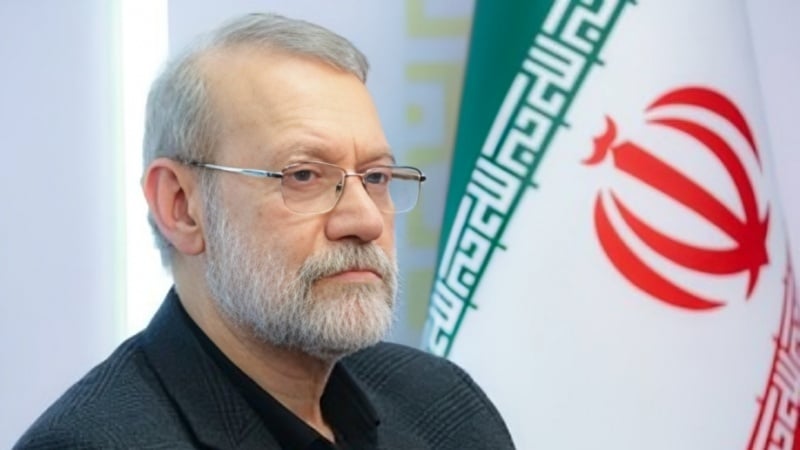
Ali Larijani, Secretary of Iran’s Supreme National Security Council
Pars Today — The Secretary of Iran’s Supreme National Security Council, speaking at the conference “Us and the West; in the Views and Thought of Ayatollah Khamenei”, emphasized: “The West has tied global relations to power.”
Ali Larijani, Secretary of Iran’s Supreme National Security Council, said on Monday at the closing ceremony of the conference “Us and the West; in the Views and Thought of Ayatollah Khamenei” — which began in Tehran on November 4 — that the West once claimed to rely on science and freedom of thought, but the result was two world wars. Today, he added, the West has made its direction even more explicit and has tied global relations to power.
According to Pars Today, Larijani, reviewing the historical background of Iran–West relations, added that throughout history these relations have experienced many ups and downs for various reasons, encompassing economic, political, cultural, and military aspects — and could be considered among the most turbulent international interactions.
At the same conference, Mohammad Es'haqi, Deputy for Education and Research at the Office for the Preservation and Publication of the Works of Ayatollah Khamenei, stated that scientific effort is needed to understand the intellectual framework of the Leader of the Islamic Revolution. He emphasized that when engaging with his statements and intellectual framework, the first step must be taken correctly — which is to gain an accurate understanding of this framework. He added that this conference and its academic sessions aim to facilitate this step so that a proper understanding of his views can prevent misinterpretation.
Es'haqi went on to say that the Leader of the Islamic Revolution is a multifaceted figure whose core and foundation lie in divine teachings and the teachings of the Ahl al-Bayt (pbut). He added that the intellectual framework of Imam Khamenei is an interconnected body of knowledge spanning the cultural, social, economic, political, defense, and security fields — and must be viewed as an integrated system.
He stressed that, from the perspective of the Leader of the Islamic Revolution, Western civilization is based on theoretical foundations that, being distant from spirituality, ethics, and the Creator of existence, have brought disastrous consequences for humanity. He added that these disasters have become even more evident with the events in Gaza. Today, inherent in the nature of Western civilization is the fact that all the slogans once used to portray an ideal image of the West have ultimately failed.
He stated that the events in Gaza have stripped away all the slogans of liberal democracy — such as protecting children, the right to self-determination, and similar principles that are supposed to be among the core values of the Western system — because this civilization is distant from spirituality, morality, religion, and divine guidance.
Continuing the event, Mousa Haqqani, Secretary of the conference, also said that with the victory of the Islamic Revolution, Iran entered the third major historical stage. He emphasized that during this transition from the old order to the new, Iran must act with strength in order to preserve its position in the international system. He added that the key approach to confronting the West is to turn to history, because through past experiences one can recognize the true nature of arrogance.
Haqqani emphasized that the goal of the revolutionary generation that brought about the revolution in Iran was independence. He said that Iran seeks independence in order to achieve progress, and this is also the concern of today’s youth. Unfortunately, he added, Western societies present our society with a mirage of progress that comes without independence. They also hold up some regional countries as examples, while those countries lack independence in every field — something that was seen most clearly in Sharm el-Sheikh.