Trial of Israeli regime leaders: Shared demand of Muslim nations
-
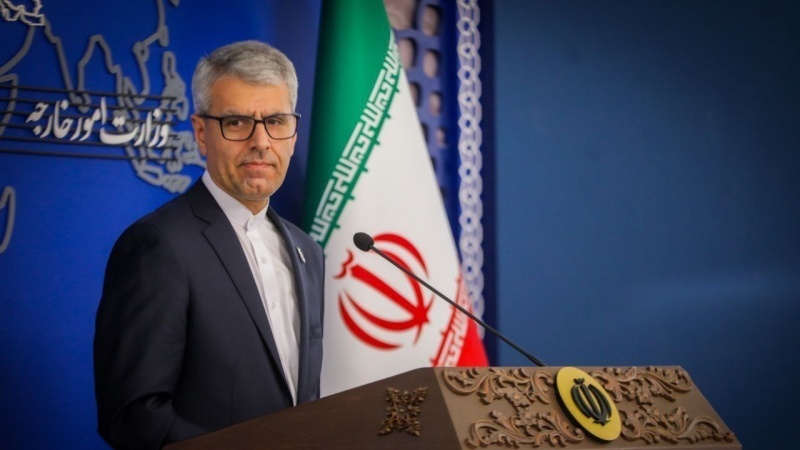
Esmail Baghaei, spokesperson for Iran’s Ministry of Foreign Affairs
Pars Today – The spokesperson for Iran’s Ministry of Foreign Affairs, condemning the Israeli regime’s crimes in Gaza and its attacks on Lebanon, called for serious action by regional countries and the international community to confront the Israeli regime’s ongoing threat to regional and global peace and stability.
Esmail Baghaei, spokesperson for Iran’s Ministry of Foreign Affairs, referring to the ongoing killing and genocide of Palestinians in Gaza through continuous bombings and the blockade of humanitarian aid, reminded the international community and the United Nations of their responsibility to take immediate and effective measures to stop these crimes and to prosecute the war criminals and perpetrators of genocide.
Baghaei, referring to the recent United Nations General Assembly resolution on the advisory opinion of the International Court of Justice—which emphasized the obligation of all states under Article 1 of the 1949 Geneva Conventions to ensure the implementation of international humanitarian law—strongly condemned the repeated and egregious violations of humanitarian law, as well as the commission of war crimes, crimes against humanity, and genocide by the Israeli regime, and stressed the necessity of ending Israel’s impunity.
Baghaei also stated that the Israeli regime, with full support from the United States and the indifference of the ceasefire guarantors in Lebanon and Gaza, continues to commit brutal crimes in the occupied Palestinian territories and Lebanon.
He emphasized that prosecuting the leaders of the Israeli regime at the International Criminal Court (ICC) or establishing a special tribunal could prevent the repetition of these crimes and send a clear message to human rights violators worldwide. Popular movements and human rights organizations around the globe are calling for Israel’s accountability, and these efforts could pave the way for international legal action.
Under these circumstances, prosecuting the leaders of the Israeli regime in international courts faces serious obstacles, as the political and diplomatic support of the United States and some Western countries, structural weaknesses in the international legal system, and the lack of effective enforcement mechanisms for the International Criminal Court (ICC) hinder the implementation of rulings and judicial proceedings.
The ICC does not have independent enforcement powers and relies on the cooperation of states to execute its judgments. Many, including the United States and Western governments, refuse to provide the necessary cooperation for the surrender of accused individuals or the enforcement of court rulings.
As the main supporter of the Israeli regime, the United States uses its veto power in the UN Security Council to block binding resolutions. In some cases, the U.S. has even imposed sanctions on judges and prosecutors of the International Criminal Court to disrupt proceedings related to cases involving Israel and its allies. Many Western governments, fearing political and economic repercussions, refrain from openly supporting the prosecution of Israeli regime leaders.
The support of the United States and Western countries, the structural weaknesses of the International Criminal Court, the lengthy judicial processes, and Israel’s non-membership in these courts all hinder the realization of justice. However, filing complaints and issuing rulings—even if not enforceable—carry symbolic and political significance and can undermine the Israeli regime’s legitimacy on the global stage.
Despite all the obstruction by the U.S. and the West in support of Israel at the UN and international courts, the Islamic world can, by leveraging international legal mechanisms, political and diplomatic unity, the formation of joint committees, and public pressure, create conditions for prosecuting Israeli regime leaders in international courts.
Legal avenues exist for prosecuting the Israeli regime in international bodies, but their implementation requires unity among Islamic countries, public pressure, meticulous documentation of crimes, and the use of existing legal mechanisms.
With the continuation of Israeli crimes in Gaza, many civil society activists and academic institutions around the world, including in the United States and Europe, have intensified their efforts to create conditions for the prosecution of Israeli regime leaders in international courts.