Asia economy | China emerges as dominant energy player in southeast Asia
-
China emerges as dominant energy player in southeast Asia
Pars Today – According to Foreign Policy magazine, China has become the dominant energy player in Southeast Asia through massive investments, affordable technology, and unmatched production scale.
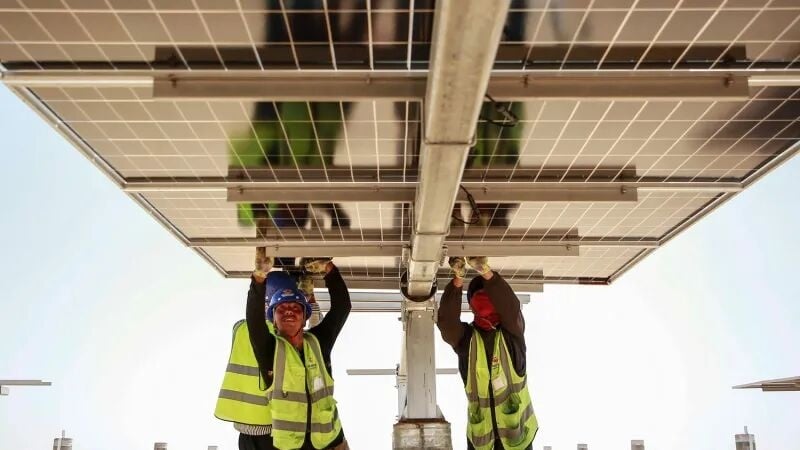
China has developed its renewable energy capacity faster than any other country, and the value of its renewable technology exports this year has reached approximately $20 billion — a figure that indicates Beijing is becoming a central hub in the global clean energy supply chain.
In the hydropower sector, China has also become the leading dam-building contractor in ASEAN, relying on large-scale construction and advanced technologies. Analysis of multiple sources, government documents, and media reports shows that about half of the new hydropower plants commissioned in Southeast Asia since 2014 have been built with the participation of Chinese companies.
China’s steady but gradual advance has posed serious challenges to U.S. and allied efforts to influence the energy trajectory of Southeast Asia.
China warns against trade restrictions imposed by the U.S. and the West
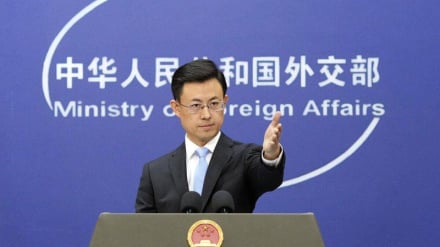
Chinese representatives at the UN Climate Change Conference in Brazil warned that trade restrictions — including U.S. tariffs and measures by the European Union — hinder progress toward greenhouse gas reduction targets and the advancement of green technologies.
Senior Chinese advisors at the UN Climate Change Conference stated that the West’s increasing use of unilateral measures has raised the global cost of green technology products and is hindering the global green transition. They warned that such actions, instead of reducing greenhouse gas emissions, would lead to mutual distrust and disruptions in global supply chains.
Wang Yi, an environmental economist and a standing member of China’s National People’s Congress, warned that Western countries face a clear contradiction in their approach to China: on one hand, they demand that China accelerate its greenhouse gas reduction efforts, while on the other, they impose tariffs and regulations that restrict China’s progress in the production and export of green technologies.
Slowing economic growth in China
China’s economy faced a sharp decline in fixed-asset investment, industrial production, and household consumption in the third quarter of 2025 — signs that the growth momentum of the world’s second-largest economy is waning.
The economic slowdown has accelerated since the start of the final quarter, with data showing declines in investment, industrial activity, and household spending. These figures reflect an economy struggling to regain its growth trajectory after months of sluggish performance. According to the National Bureau of Statistics of China, fixed-asset investment over the first ten months of this year fell by 7.1 percent, marking the steepest drop in this period.
The National Bureau of Statistics of China, acknowledging the challenges facing the country’s economy, stated: “The economy is confronted with a set of unstable and unpredictable factors in the external environment, as well as significant pressures to restructure the domestic economic framework.”