New UNGA resolution: Global stance against Zionist regime
-

The UN General Assembly
Pars Today – The United Nations has obliged Israel to implement the ruling of the International Court of Justice.
According to Pars Today, the UN General Assembly, in response to Israel’s violation of the Gaza ceasefire, adopted a new resolution obliging Tel Aviv to implement the International Court of Justice ruling regarding the region.
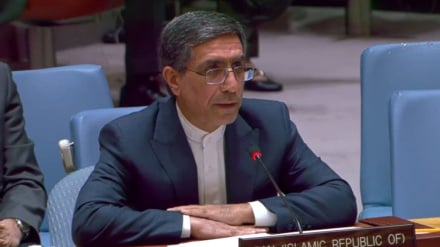
On Friday, December 12, the General Assembly passed a resolution calling on Israel to ensure full humanitarian access to the Gaza Strip, provide food, water, medicine, and shelter to its residents, respect the immunity of UN premises, and adhere to its obligations under international law.
The resolution was adopted in response to a recent advisory opinion by the International Court of Justice (ICJ), which outlined Israel’s responsibilities both as an occupying power and as a member of the United Nations.
The resolution, sponsored by Norway and more than 12 other countries, was adopted with the support of 139 nations, while 12 countries voted against it and 19 abstained.
Merete Fjeld Brattested, Norway’s permanent representative to the UN, warned ahead of the vote about the situation of the Palestinian people, noting that 2024 was one of the most violent years in the past three decades. She added that 2025 has followed a similar path, with few signs that the trend will ease in 2026, emphasizing that the situation in the occupied Palestinian territories is of particular concern.
The Norwegian ambassador further stated that civilians bear the highest cost, that respect for humanitarian principles is declining, and that the most fundamental humanitarian norms are under pressure. She also noted that member states are seeking transparency regarding the provision of vital humanitarian aid to the Palestinian civilian population.
However, Jeff Bartos, the U.S. representative, rejected the resolution ahead of the vote, speaking in support of Israel and against the UN General Assembly and its resolutions. He claimed that “this symbolic resolution only creates division and hinders peace,” emphasizing that Washington would vote against it and urging other countries to do the same.
Despite the U.S. efforts and statements, the resolution was adopted, highlighting the declining global influence of the United States and the growing solidarity of nations with the oppressed Palestinian people, who are now under more pressure from the Zionist regime than ever before.
On December 5, the UN General Assembly also adopted five resolutions in favor of Palestine by an overwhelming majority, including the extension of UNRWA’s mandate, condemnation of Israeli settlements, and support for Palestinian refugee rights.
Although UN General Assembly resolutions are not legally binding, they reflect global support for the rights of Palestinian refugees and highlight the growing international isolation of Israel.
The recent UN General Assembly resolution once again demonstrated that the international community holds a serious and critical stance toward the actions of the Zionist regime in the Occupied Territories, particularly the Gaza Strip.
Adopted with broad member support, the resolution obliges Israel to implement the International Court of Justice ruling on humanitarian assistance to Gaza, ensuring that the people of the region have access to food, water, medicine, and shelter. The text of the resolution also emphasizes that Tel Aviv must not obstruct relief operations or leave Palestinian civilians in conditions of displacement and hunger.
This action by the UN General Assembly can be seen as a sign of increasing international pressure on the Zionist regime. Despite a nominal ceasefire, the people of Gaza continue to face extremely dire conditions due to Israel’s obstruction, with numerous reports highlighting severe shortages of food and medicine.
The adoption of such a resolution reflects global solidarity with the Palestinian people, and the support of 139 UN member states underscores a broad consensus condemning Israel’s occupation policies and restrictive measures.
From a political perspective, this resolution carries particular significance because the UN General Assembly, as a universal body, reflects the voice of the global majority. Although resolutions of the General Assembly are not legally binding, their legal and moral weight can lay the groundwork for increased pressure on the Zionist regime.
Notably, the resolution emphasizes the UN’s responsibility toward the Palestinian issue until a comprehensive solution is achieved, signaling that Palestine remains a priority on the international agenda and that the global community is unwilling to remain silent in the face of human rights violations in the region.
On the other hand, the resolution sends a clear message to countries supporting the Zionist regime. Its adoption by an overwhelming majority demonstrates that Tel Aviv’s policies are increasingly isolated on the international stage, and even some of its traditional allies may be compelled by global public opinion to reconsider their positions.
Ultimately, this resolution can be seen not only as a legal document but also as a political and moral stance against the actions of the Zionist regime. Through this action, the international community has once again emphasized the need to end the criminal actions of Israel against the oppressed people of Gaza, respect the rights of civilians, and cooperate with international institutions.
Although the practical implementation of these demands requires political will and further pressure, the adoption of such a resolution could mark a turning point in global support for the Palestinian people and in countering the occupation policies of Israel.