FAO representative: BRICS agricultural cooperation will shape global trade
-
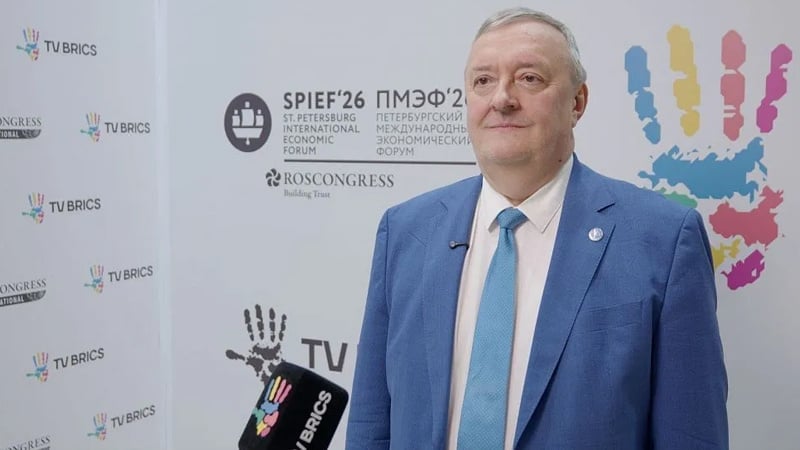
Oleg Kobyakov, the head of FAO liaison office with the Russian Federation
Pars Today – The head of the Food and Agriculture Organization (FAO) liaison office with the Russian Federation has emphasized that cooperation among BRICS member states in the agricultural and food sector will play a decisive role in the future of the global economy and trade.
According to Pars Today, citing BRICS TV, Oleg Kobyakov, in an exclusive interview with TV BRICS on the sidelines of the St. Petersburg International Economic Forum (SPIEF), noted that with BRICS countries accounting for 42% of the world’s population and having a relatively young demographic trend, focusing on youth in agricultural development is essential, as this generation will shape future global production and consumption.
He added that BRICS countries span several continents and include some of the world’s most populous nations, accounting for more than one-third of global GDP and a significant share of international trade, particularly in agricultural products and related industries. Therefore, the direction of global economic development largely depends on the nature of both intra-group and external cooperation within BRICS.
Kobyakov, referring to the main axes of this cooperation, emphasized the need to ensure the sustainable development of agri-food systems, create appropriate regulatory frameworks, exchange best practices, provide fair market access for producers, and make use of the full range of innovations, including artificial intelligence and scientific advances at the nanomolecular level for the improvement of plant and animal breeding.
He described education and special attention to young people as a fundamental pillar, saying that the agricultural sector is no longer solely the domain of older generations and is increasingly becoming an area of activity for youth—especially in BRICS countries such as Brazil, South Africa, and India, which have young populations. Today’s students are the architects of tomorrow’s global production and consumption systems.
Kobyakov further stressed the central role of farmers as a pillar of social stability, noting that in most countries, a significant share of agricultural production comes from both small and large farms. He added that the modernization of rural areas in line with current needs—through infrastructure such as roads, hospitals, educational centers, high-speed internet, and financial opportunities—is a key factor in sustainable national development, strengthening social foundations, and improving overall welfare.
The 29th St. Petersburg International Economic Forum is being held from June 3 to 6, with TV BRICS acting as an information partner of the event.