The UK’s ill-advised piracy on the high seas
Jul 30, 2019 03:39 UTC
Britain at the behest of the US, is indulging in lawlessness on the international scene, especially against the Islamic Republic as is evident by its hijacking of the super tanker Grace I carrying 2-million plus barrels of crude oil.
The following is an article in this regard, titled: “The UK’s Ill-advised piracy on the high seas”.
The writer is Hossein Askari, a scholar of economic development in Islam and the founder of Islamicity Indices, a benchmark to build effective institutions for political, social and economic reform and progress. He teaches at American universities.
The United Kingdom should recognize what has become its position in the world — an important nation with an imperialistic history but now a much diminished global power. Blindly following the United States into hazardous waters could have dangerous results: America might not reward subservience or could change course in its own self-interest. While following George Bush into Iraq is now widely conceded in the UK as having been ill advised, British leaders seem to have forgotten the consequences of that disastrous decision.
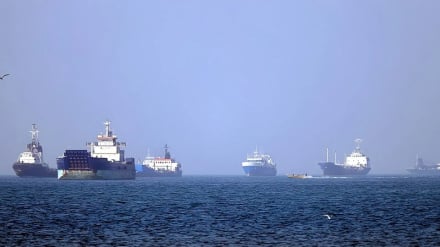
On July 4, UK forces seized an Iranian supertanker, Grace I, off the coast of Gibraltar. At first, the reason for the seizure in news reports was that London was responding to a request from the United States because the tanker was carrying oil to the Syrian refinery of Banias in violation of UN sanctions. This report was quickly ‘corrected’ by Jeffrey Hunt, the outgoing UK Foreign Minister. The official word was that the Iranian vessel had been seized yes because the oil was destined for Syria, but which was in violation of EU (not UN) sanctions on Syria.
Iran objected vehemently to this seizure. Later, Iran had to detain a British-flagged tanker, the Steno Impero, on July 19 in the Persian Gulf for violating international maritime rules after colliding with an Iranian fishing trawler and then attempting to flee. Then Jeffrey Hunt went on the warpath and threatened Iran with “serious consequences” if Iran does not release the tanker, a rhetoric further inflamed by the British defense minister branding the seizure “a hostile act.”
Three things stand out for us — the UK in fact seized the Iranian tanker at the request of the US. Hunt has made matters worse by his rhetoric and the UK and the US are now boxed in without a face-saving exit. Let me explain.
The premise that the oil was destined for Syria is a tough claim that cannot be substantiated. How can the outgoing British Foreign Minister prove that the oil was so destined? Even if he had irrefutable proof, couldn’t Iran at some point have changed its mind and diverted the tanker?
If every country acted so, seizing goods because they may be destined to a sanctioned country, world commerce would become entangled and come to a standstill. If the initial media reports were to be believed, namely, that supplying oil to Syria is in violation of UN sanctions, who determined this? Leaving aside the claim of a UN sanctions violation, the outgoing British Foreign Minister is clearly reported as saying that the UK took this action because of the EU embargo on oil supplies to Syria. Who in the EU reached this conclusion and made the decision to seize the Iranian tanker? The lie becomes even worse when we note that the EU embargo on oil supplies to Syria applies to EU member states, namely, EU countries cannot supply Syria with oil. This rule does not apply to supplies from Iran or any other third country. Surely the British Foreign Minister must be familiar with EU resolutions seeing as the UK is still in the EU! Clearly, this seizure was not triggered by a violation of EU but was most likely in response to a US request.
There is another perplexing aspect to this tanker seizure. Even if the EU or just simply the UK had imposed sanctions on the delivery of fuel from any country to Syria, would the seizure of a tanker be “legal” as claimed by a number of UK politicians and military personnel? If so, then any nation could sanction whoever they wished and seize tankers, or any other vessel, at will! This would be an unusual interpretation of legality and thus justification of piracy by the powerful.
But Hunt’s untruths have become magnified after his ill-advised rhetoric. The folks who run Iran’s IRGC (Revolutionary Guards) are not traditional military leaders and diplomats. They are intelligent and street smart and have an image to uphold in Iran and in the region. Hunt clearly has no understanding of their thinking and how they might react to provocation.
As a result, Hunt has now backed the UK into an even tighter box. What are the UK’s options? They could release the Iranian tanker and get the British tanker released. But this would hurt Britain’s global image. They could do nothing, again a stand that would not work well at home and would humiliate Britain at the hands of lesser power. Or they could join forces with the US, PGCC countries and Israel to bomb or possibly invade Iran, start a regional war and incur the wrath of most Iranians inside and outside of Iran and many other Muslims around the world for years to come.
The short and the long of this is that the seizure of the Iranian tanker was a monumental policy blunder. The UK is trying to divorce itself from its European partners but is in the process falling in line as a devoted follower, not partner, of a power whose influence has already crested. It now does not have a favorable strategy for an exit from its blunder. Future British foreign ministers would do well to better understand the thinking of Britain’s adversaries and how they might react, as well as the motives of their closest ally.
AS/MG
Tags