Tribute to the great teacher Ayatollah Motahhari
May 04, 2018 04:20 UTC
The Islamic Republic of Iran is in a festive mood these days in view of the blessed birthday of the Lord of the Age, Imam Mahdi (May God hasten his reappearance), the 12th and Last Infallible Heir of Prophet Mohammad (Blessings of God upon him and his progeny). We are all awaiting the Mahdi’s reappearance and establishment of the global government of peace, prosperity and justice.
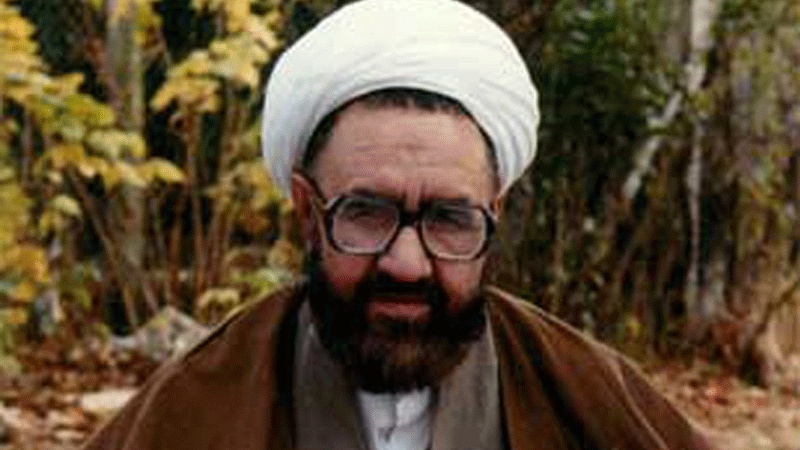
Over the past millennium many a scholar has written a work on the concept of the Saviour of Humanity, and strove to awaken masses to this reality. One such scholar was Ayatollah Morteza Motahhari, who as an ideologue of the Islamic Revolution and writer of the excellent book in Persian, titled “Qiyam va Enqelab-e Mahdi”, which means the “Uprising and Revolution of the Mahdi”, achieved martyrdom in fulfillment of his mission.
In 1979, he was gunned down on Ordibehesht 12 or May 2 at a public place in Tehran by the enemies of Islam and Iran in a vain bid to undermine the grassroots movement of the Iranian people under the leadership of the Father of the Islamic Revolution, Imam Khomeini (RA).
As a true Muslim and as a loyal servant of Imam Mahdi (may God hasten his reappearance), the thoughts of Ayatollah Motahhari continue to inspire the people of Iran, who mark it as Teacher’s Day.
This year, however, because of the coincidence of 12 Ordibehesht with the auspicious 15th of Sha’ban and consequently a public day, the festivities of the birthday of Imam Mahdi (AS), and its international significance as the Day of the Oppressed, have taken precedence, and the annual Teacher’s Day ceremony was marked a day before on Tuesday, May 1, with students at schools and at colleges throughout Iran, observing it in traditional style, with bouquet of flowers as tributes to the efforts of teachers in imparting proper education for laying foundations of a sound and healthy Muslim society.
Stay with us for an interesting programme on the life and works of Ayatollah Motahhari.
Ayatollah Morteza Motahhari was a thinker, a capable writer and an eloquent speaker who played a significant role in enlightenment and explanation of the issues of the day for the Iranian people during those dark days of Pahlavi rule. There is a beautiful statement about him which says: “At first glance, Motahhari seemed to be a philosopher and when he was known better he is like theologian and logician and whoever knew him up-close would see spark of mystical vision in him.
He was born on February 3, 1920 in the town of Fariman, near the holy city of Mashhad in Khorasan Province, northeastern Iran in a religious family. After receiving elementary education in his hometown, his love and passion for the holy Qur’an and Islamic teachings led him to enroll at the Mashhad seminary. In 1937 he left for the Qom seminary to pursue higher studies, and benefitted from the lessons of the philosopher and exegete of the holy Qur’an, Allamah Seyyed Mohammad Hussein Tabatabai, and many other distinguished scholars, especially the Father of the Islamic Revolution, Imam Khomeini (God bless him).
Ayatollah Motahhari’s sharp intelligence, talent and amazing diligence in learning made him the best seminary student. During his 12 years of stay in holy Qom, he attended Imam Khomeini’s classes on ethics, philosophy, gnosis, jurisprudence and principles. He passed the academic levels so fast that in a short time he attained Ijtihad or independent reasoning on the basis of the holy Qur’an and the Hadith. He became one of the famous and well known teachers at that time and his classes were full of students who were thirsty for knowledge and wisdom.
In 1950, Motahhari married the daughter of one of the leading scholars of Khorasan. Before marriage he lived in a small room in the holy city of Qom and had a very simple life. Even after his marriage he had a tough life and there were times, when he had to sell his books or borrow money from his friends for subsistence. But his house was full of sincerity, and despite the hardship of life, the couple enjoyed a happy life and did not feel any pain. In 1952 he shifted to Tehran to continue his intellectual and cultural activities. Teaching at seminaries and the faculty of divinity and Islamic teachings at Tehran University were some of his activities. In addition he published various scientific, political, moral and historical books and articles in Tehran.
Along with his academic activities, he continued his political activities. In 1963 He played a significant role in organizing the 15th of Khordad Uprising on June 5 1963, in protest to the arrest of Imam Khomeini by the Shah’s regime. He was imprisoned following his impassionate speech against the Shah. A month later, the regime was forced to release him along with other ulema because of intense public pressure. After his release he wrote books covering social requirements and delivering speeches at universities, and Tehran’s important mosques.
Ayatollah Motahhari’s authoritative pen stood against deviant thoughts and he spared no efforts to defend Islam on the basis of logic, the holy Qur’an and Hadith. He thus attracted educated youth and groomed them for the tasks ahead. Logical and rational criticisms of the false ideas of some western philosophers were considered as other abilities of Professor Motahhari. He believed in promoting the Islamic movement, and to reach this goal he resolutely fought distortions and deviations.
In 1967, when the illegal Zionist entity Israel attacked Arab states during the 6-day war and occupied large chunks of their territories including the holy city of Bayt al-Moqaddas, he released a statement, calling on the Iranian people to provide Palestinian Muslims with the necessary relief aid. As a result, the British-installed and American-backed Pahlavi regime arrested and imprisoned him.
In a moving speech, he drew the attention of Muslims and especially the Iranian people to the woeful situation of the Palestinians, saying: “If we truly want to make ourselves worthy in the sight of God Almighty and Prophet Mohammad (blessings of God upon him and his progeny); if we want to be respected among world nations, we have to close ranks with fellow Muslims. If the Prophet were alive today, what would he have done? What affairs would he think about? By Allah, the soul of the Prophet is displeased at the Israelites. If someone is not talking about this issue, they are committing a sin, if I am not talking about this issue, by Allah, I am committing a sin; if any speaker or intellectual is not talking about this issue he is committing a sin. By Allah, we have a responsibility, and we not fulfilling it. If Imam Husain (AS) was here in our midst today, he would have said: If you want to commemorate my sacrifice and if you want to beat your chest in grief for me, flagellate yourself with chains for my sake, then your chant today should be, "PALESTINE!!!"
Ayatollah Motahhari’s speech about Palestine was so stirring and effective that copies were made and circulated, and after the victory of the Islamic Revolution, it has been regularly broadcast by Iranian media in support of the oppressed people of Palestine. On release from prison he continued to give speeches at Tehran’s important mosques. Around the year 1974 he was forbidden to speak, a ban that lasted till the triumph of the Islamic Revolution in 1979. In describing the unique characteristic of Ayatollah Motahhari, the present Leader of the Islamic Revolution, Ayatollah Seyyed Ali Khamenei says: “Martyr Motahhari considered education as his important mission. He was not only a teacher in the classroom, but also among his friends, and in the society he was known as a capable teacher. He was pious, pure-hearted, always reciting the holy Qur’an and offering the late midnight prayers with tears in the presence of God. He paid much attention to learning and science. Despite his encyclopedic knowledge, he was indeed looking for learning till the end of his life.”
By presenting genuine Islamic ideology through his lectures, speeches and writings, Motahhari served the cause of the Islamic Revolution during the years 1972-to-79; since in those years the leftists had increased their propaganda to deceive Iranian Muslims. In those years, on the suggestion of Imam Khomeini, who was in exile in holy Najar, Iraq, he traveled to Qom twice a week to teach at its seminary, where he taught important courses. At the same time he was active in Tehran. In 1976, following an ideological dispute with a communist teacher of the faculty of Tehran University, he tendered his resignation. In those years Ayatollah Motahhari, in collaboration with other ulema, established the “Jameye Rohaniat-e-Mobarez” or the Society of Combatant Ulema.
Although Professor Motahhari’s contact with Imam Khomeini continued during the Imam’s 14-year exile in Iraq, via letters and other means, in the year 1976 he managed to travel to the holy city of Najaf and consulted with the Beloved Leader on the important issues of the Islamic Revolution. After the start of the new phase of the Islamic Revolution, he fully devoted himself to the people’s movement and played a fundamental role in all of its phases. At the time of Imam Khomeini’s brief stay in Paris, after being forced to leave Iraq, Ayatollah Motahhari traveled to France, where he spoke with the Imam on the important issues of the Islamic Revolution and it was then that Imam Khomeini urged him to form the Islamic Revolution Council.
Till the victory of the Islamic Revolution, Ayatollah Motahhari had always acted as a trusted advisor for the Imam, and was expected to play a key role in solving the problems after establishment of the Islamic Republic, but the cowardly enemies, aware of the importance of this sharp politician and thinker, assassinated him. He attained martyrdom on 2nd May 1979 after leaving an ideological and political gathering in Tehran. His assassin belonged to a terrorist grouplet that styled itself “Forqan”. Ayatollah Motahhari had earlier warned about the deviation and danger of this grouplet. Following his martyrdom, Imam Khomeini hailed him as the fruit of my life.
In his works, Ayatollah Motahhari has subjected both the traditional and modern thoughts to a critical analysis, and rationally exposed the deviant ideas. In 1973 he wrote: I have been writing books and articles for 20 years and the only thing that I had in mind in all my works was solving the problems and responding to questions in the field of Islamic issues in our era. In a chapter of his book titled Spiritual and Moral Crisis in the Current Era, Professor Motahhari has detailed some of the crises such as increase in suicide, neurological diseases, poverty, hunger, environmental pollution and the rebellious attitudes among modern youth who act like hippies. He believes that the main problem of western society is the absence of religion and spiritual values from daily life. In this regard in the book Falsafa-e Akhlaq or Philosophy of Ethics, he says: “Today man has acquired science but the actual cure of his pain is faith, since intellectual or nonintellectual awareness can do nothing in this regard. The goal of awareness is knowledge, and not evasion of faith. The West tried to remove faith in the hope of solving the problems on the basis of knowledge and science, but failed. Neither philosophical awareness has any benefit nor intellectual awareness.” On the relationship between science and faith, he says: Science and faith do not contradict each other, but actually complete each other… obviously science cannot replace faith nor vice versa. In his interesting and eloquent words, Ayatollah Motahhari described the role of faith and science in life as follows: “Science provides the tools while faith makes the ends meet. Science is the beauty of thought and faith is the beauty of feeling. Science explains the nature while faith makes human beings. Science is the revolution of the exterior while faith is the revolution of the self or innate revolution. Science brings light and capability while faith gives love, hope and encouragement. Science safeguards the outside environment while faith safeguards the self and the soul. Science is the beauty of mind while faith is the beauty of soul. Science makes one immune from diseases, floods, earthquakes and storms, while faith gives security against anxieties, loneliness, despondency and negligence.”
Martyr Motahhari has discussed in depth such academic issues as justice in Islam. He believes that justice in Islam should be taken into account as a social philosophy and is important than anything else and is based on Islamic policies; hence even a little deviation from justice is not permitted. He says the basic of justice in Islam is in the holy Qur’an and in the practice and behavior of Prophet Mohammad (blessings of God upon him and his progeny). In his book titled Adl-e Ilahi or Divine Justice, he takes up, in the light of the holy Qur’an such issues as teamwork and justice. In regard to justice, he says: Some believe that justice means that everyone in any condition and situation and with any talent exactly should be in the same class. He exposes the fallacy of such an idea and explains that justice means: Human beings, as per their individual characteristics, talents and efforts, are entitled to certain rights and privileges. Justice means that man gains his right based on what he deserves. Justice means to give this right to its possessor and this is the same meaning as respecting each other rights.
Ayatollah Motahhari was a thinker who paid special attention to education. He had interesting ideas in this regard and has written a lot on the philosophy of education. He has considered piety, purification, self-building, and spiritual values as significant characteristics in this regard. From his viewpoint, education has five pillars, which include developing a person’s positive ideas and encouraging the flowering of hidden talent, based on moral values. According to him, it is Islamic values that make a person an ethical creature, since Islam regards education as part of worship, since man attains perfection when he reaches the stage of proper servitude to the Almighty Creator. At the same he has cautioned against wrong social rules that are destructive to the innate nature of human beings. This warrants the proper bringing up and grooming of children and making them aware of the harmful effects of the environment including radio, and TV programmes, as well as emotionally disturbing literature through newspapers and magazines that may focus on sex and violence. His another brilliant work is the “Rights of Women in Islam.”
AS/ME
Tags