A Heavenly Marriage & Importance of Family Day
Aug 13, 2018 04:35 UTC
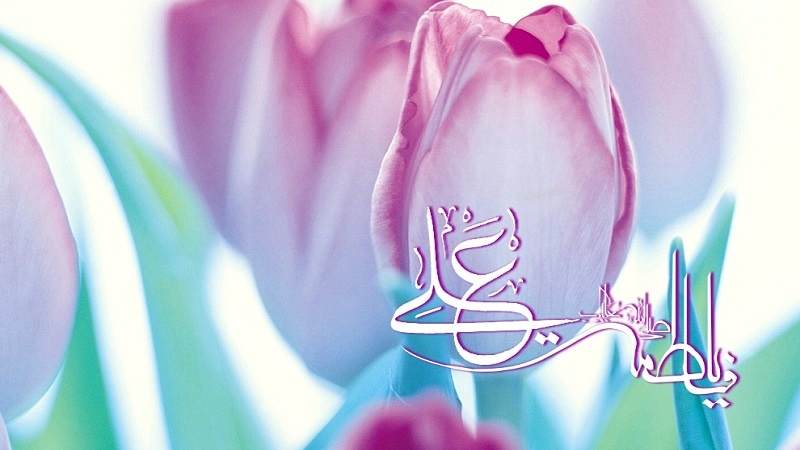
Salaam and heartiest felicitations to you all on a very auspicious day. Today, the 1st of the month of Zil-Hijjah is the anniversary of the blessed marriage of the noblest-ever pair.
It is the day on which in the year 2 AH, Prophet Mohammad (SAWA) solemnized the nuptials of his Immaculate Daughter, Hazrat Fatema Zahra (peace upon her) with his dear cousin, the Impeccable Imam Ali ibn Abi Taleb (AS). The union of this Infallible Couple laid the foundations of the Fabulous Family, whose fruits were four immortal children – two peerless sons and two equally virtuous daughters – Imam Hasan and Imam Husain, and Hazrat Zainab and Hazrat Omm Kolsoum (peace upon them). The following is a special feature in this regard, since this day is marked in the Islamic Republic of Iran every year as the Day of Marriage and Family.
“Here is Gabriel informing me that Allah gave Fatema to you in marriage, and made forty thousand angels testify to her marriage. He also revealed to the Tree of Tooba to sprinkle them with gems, rubies, jewelry and embellishments. When it had done this, the Houris rushed to collect these gems, rubies, jewelry, and embellishments to exchange them for gifts until the Day of Resurrection.”
These are the tidings that the Prophet gave to his dear ward and cousin while conferring upon him yet another divinely-decreed status, this time of son-in-law – a status which only one deserving person could achieve, since the Messenger of Mercy had only one real daughter whom God had bestowed as wife in the celestial heavens of the One and Only Commander of the Faithful, Imam Ali Ibn Abi Taleb (AS).
Today is the 1437th anniversary of the marriage that was made in heaven.That is the reason, we in Iran celebrate the 1st of Zil-Hijja as “Family Day” in honour of the start of conjugal life for the most excellent and exemplary family that no one else in the history of mankind could ever build.
True, the Prophet of Islam and the virtuous Hazrat Khadija (peace upon them) made an excellent husband-and-wife pair for 25 long years, and were indeed the model of emulation for the neo Muslim society, but it was the fruit of this blessed marriage, Fatema az-Zahra (peace upon her), who was destined to play the immortal role as the core of pristinely pure family, the spotless purity of whose members have been vouchsafed in the holy Qur’an by God Himself in ayah 33 of Surah al-Ahzaab.
Islam attaches paramount importance to the building of the family unit on a sound and healthy basis as the firm foundation of a progressive society. The teachings of Islam aren’t theory, as some might misconstrue. The Almighty Creator in fact made the Prophet and his Impeccable Progeny as models of emulation in every field as is evident by their exemplary conduct. Marriage and family life are thus part of the practical precedents set by these spotlessly clear personalities for the benefit of the believers. Indeed the best and lasting demonstration in this regard was given by Imam Ali and Hazrat Fatema Zahra (peace upon them), whose marital life has continued to inspire all faithful couples in every era and place.
After marriage, the couple normally plans the division of works and household chores. In view of the physical differences between males and females, Islam has introduced different roles for men and women, in harmony with their respective natures. Proper division of work creates balance in family life. The handling of responsibilities by the pair thus builds mutual trust and an aura of love and affection that is so essential for raising sound and healthy children. In view of this, Islam has entrusted the husband, who is physically stronger than his delicate spouse, with the task of earning money for the household through different means, including outdoor duties that require strength and endurance. It is here that the exemplary life of our divinely-appointed leaders shows us the way. Once, concerning housework, Imam Ali and Hazrat Fatema (peace upon them) sought the opinion of the Prophet, who said that indoor jobs should be handled by the wife while outdoor duties is the responsibility of the husband. Hazrat Fatema (SA) got happy and said: I am very pleased that the Prophet saved me from work that is related to men or causes frequent association with men. This is further proof of the fact that Islam, in harmony with the system of creation, has allocated both men and women certain duties and responsibilities that are in line with their nature and physical characteristics.
Islam emphasizes the spiritual aspects of doing housework, and has offered the couple incentives by speaking of the rewards reserved for the husband and wife for carrying out their respective responsibilities. When a woman feels that her work is a kind of worship she will definitely strive to win the content of the Loving Creator, rather than feeling tired or bored of her duties. Moreover, in order to ease the burden of housework for women and to create affection between the couple, Islam has encouraged men to help their wives in housework as well. There are many instances when Imam Ali (AS) used to help Hazrat Fatema (peace upon her) in the housework, in addition to his outdoor duties. The Prophet’s 6th Infallible Heir, Imam Ja’far Sadeq (AS) says: The Commander of the Faithful Imam Ali (AS) used to procure water and firewood, while Hazrat Fatema Zahra (peace upon her) would grind flour and bake bread. Islam, unlike other creeds and cultures, regards men and women as equal human beings, and it does not prevent women from playing social roles. The history of Islam presents numerous instances of the role played by virtuous women in society – roles that did not hinder the wife’s main responsibility in the family. A woman’s work in the society usually has certain problems and sometimes it endangers her health and spirit. Yet we find in Islamic teachings and the history of Islam, how virtuous ladies dauntlessly carried out such work whenever the situation required, without neglecting their household chores.
For instance, the sudden turn of events after the passing away of the Prophet, when his instructions were ignored and the laws of God violated concerning the leadership of the Ummah, and her own patrimony of the orchard of Fadak, Hazrat Fatema Zahra (peace upon her) had no other choice but to go to the Prophet’s Mosque and address the gathering regarding the right of leadership of her husband, Imam Ali (AS). Her famous sermons are still preserved in books of history and hadith, and are indeed lasting lessons for preservation of faith and protection of the rights of both men and women. Earlier also, during the lifetime of her father, she had gone to the field of Ohad on learning of the injuries to the Prophet during the battle the infidel Arabs had imposed on Muslims. Moreover, as is evident by ayah 61 of Surah Aal-e Imran of the holy Qur’an Hazrat Fatema (peace upon her) was the only woman who accompanied the Prophet, along with her husband and two sons, on God’s commandment to the Prophet for the unique challenge of Mubahela with the Christians in order to prove the truthfulness of Islam. She carried out all these social duties, in addition to her perfect household chores, to the extent that Imam Ali (AS) used to remark: “By Allah, I never angered Fatema or forced her to do something, nor did she ever anger or disobey me. In fact, whenever I looked at her, all gloom would be removed from my heart.”
As a mother, the Lady of Light gave to the society four immaculate children – two sons and two daughters – all of whom carved out immortal niches in the history of mankind through their faith, patience, prudence, piety, valour, wisdom, forbearance and sacrifices, the peak of which is the heartrending tragedy of Karbala. If her elder son, Imam Hasan Mojtaba (AS) had relinquished the rule of a vast realm for the sake of preservation of the values of Islam, her younger son, Imam Husain (AS) gave his lifeblood in defence of all humanitarian values. Her daughters too excelled in the social arena, as is evident by the epoch-making sermons of Hazrat Zainab in Kufa and Damascus and the role this dynamic lady played in the aftermath of the tragedy of Karbala to immortalize and universalize the message of her martyred brother. Her younger daughter, Hazrat Omm Kolsoum also played a unique role during the journey of the caravan of captives from Karbala, to Kufa, to Damascus and to Medina. This is fulfillment of the famous hadith which says: “If there was no Ali, Fatema would have remained a spinister” – like the Virgin Mary, the mother of Prophet Jesus, who couldn’t find anyone worthy of her spotlessly pure hand.
In view of these facts, the anniversary of the blessed marriage of Imam Ali and Hazrat Fatema (peace upon them) and their role in building the model family of emulation for all Muslims, serves as the lasting lessons for all sections of the ummah in every age, era, and place, in safeguarding faith and virtue within the framework of a virtuous household in addition to carrying out duties in society whenever the situation required.
Thus, the blessed union that took shape today on earth as well as in the heavens, produced the progeny of perpetual abundance (or Kowthar as the holy Qur’an says), whose most prominent member in our age is the Awaited Saviour of mankind, the Prophet’s 12th and Last Successor, Imam Mahdi (AS) who will appear in the end times to cleanse the world of vestiges of corruption and oppression by establishing the global government of peace, prosperity and justice.
AS/MG
Tags