Time to confront Islamophobia for the Democratic candidates
Jul 19, 2019 19:32 UTC
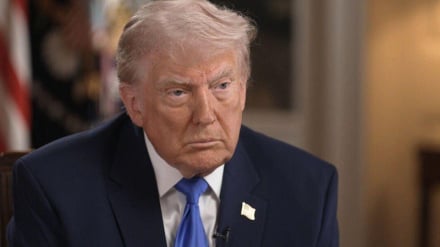
A dangerous atmosphere of hatefulness of Muslims prevails in the US, because of the poisonous propaganda campaign of the Israeli lobby, which has increased its mischief after the coming to power of the quixotic president of the Republican regime, Donald Trump.
Reem Subei, a Muslim woman attorney for the people of Toledo, Ohio, has written an article in this regard for the site ‘Truthout’, titled: “Time to Confront Islamophobia for the Democratic Candidates”.
In 2016, Donald Trump ran for president, in part, on banning Muslims. The Muslim Ban was a product of his first month in office. So, it would have been logical for Democratic candidates to express their concerns about the Muslim Ban and emphasize their commitment to upholding our nation’s constitutional ideals of protecting religious minorities.
But at the first round of Democratic presidential debates of the campaign season, none but one of the 20 candidates on stage even mentioned Muslims or the Muslim Ban. Recently, Governor Jay Inslee said, “I’m proud to have been the first governor to stand up against Donald Trump’s heinous Muslim ban.” Aside from this one comment, however, Muslims didn’t come up.
This was not surprising to most Muslims. After all, presidential candidates probably do not want to jeopardize their likeability in the minds of the US public by expressing support for Muslims in a deeply anti-Muslim nation.
On June 4, Representative Alexandria Ocasio-Cortez tried to make sense of the disproportionate attachment of the “terrorism” label to Muslim lawbreakers over their white supremacist counterparts. FBI Assistant Director for Counterterrorism Michelle McGarrity confirmed her worst suspicions: The label is reserved for foreign groups, and in the eyes of our government, Muslims are foreign, white supremacists are not.
At the congressional Confronting White Supremacy House Hearing, McGarrity blamed Congress for the discrepancy because Congress “does not have a statute for domestic terrorism like we do for a Foreign Terrorist Organization like Daesh and al-Qaeda.”
McGarrity is correct: No such statute exists. Nor can white supremacist criminals be assigned terrorism charges because the State Department has reserved the terrorism label for Muslim and Islamic organizations. Out of more than 60 designated Foreign Terrorist Organizations in the entire world, all but 11 are from Muslim-majority countries.
The real racial terrorists like the Ku Klux Klan and other white supremacist groups are nowhere to be found on these lists. McGarrity was essentially acknowledging that the entire concept of terrorism is enshrined upon racist “othering” of Muslims and Muslim groups.
The point is not that we must label white supremacist organizations terrorist. It is that the term terrorist is racially charged, and specifically deployed against Muslims in a way that can cause even progressive politicians to distance themselves from their Muslim constituents. Any proposal to solve the racist nature of terrorism charges — and, more broadly, anti-Muslim racism in the US — must contemplate the historical application of the term.
The United States government has monitored Black Muslims since the 1930s under J. Edgar Hoover’s counterintelligence program, COINTELPRO. The program collected intelligence on domestic citizens as a preemptive move.
On the immigrant front, the United States discriminated against Muslims in applying terrorist exclusion provisions in the law. Arabs, who are persons from Muslim-majority countries, are the primary group subject to many of the immigration-related provisions, as well as other measures taken in the war on terror. According to David Cole, a law professor at Georgetown University, “No other community in the US is treated to zero tolerance enforcement.”
The construct of terrorism and the theories that underpin it racialize Muslims as being more prone to violence. Moreover, recent terrorism cases suggest that Muslims are being targeted on the basis of their expression of political and religious views and beliefs, violating not only international law guaranteeing freedom of expression but also First Amendment protections.
The US, grounded in a long and ongoing tradition of white supremacy, has used anti-Muslim racism as a means to deny equal rights, protections and privileges. The Naturalization Act, which lasted from 1790-1953, mandated that naturalized citizens be ordained “free white persons” by a civil court. Ten of the 53 naturalization hearings during this era involved a petitioner from the Arab World.
Judges viewed Arabs as synonymous with Muslim. Because Muslims were presumed to be non-white and Arabs were presumed to be Muslims, Arabs were presumptively ineligible for citizenship. This presumption, however, could be rebutted. Arab Christians could — and did — invoke the fact of their Christianity to argue that they were white. These arguments sometimes secured citizenship for Christian petitioners, leaving Muslims without access to naturalization.
As late as 1942, a Michigan judge denied a Yemeni man’s case for citizenship. Apart from the man’s dark skin, the judge ruled, it was “well-known” that Arabs “are part of the Mohammedan world … and a wide gulf separates their culture from the predominantly Christian peoples of Europe.”
At last, another court, in Ex Parte Mohriez, held that a Muslim from Saudi Arabia was eligible for citizenship.
A more recent product of the anti-Muslim racialization is the Department of Homeland Security’s Countering Violent Extremism programs that expend massive amounts of money to the policing of Muslim communities in the US in the name of fighting terrorism. Under the program, a US Muslim becomes a legitimate object of policing as a potential threat of terrorism for engaging in mere noncriminal behavior, such as attending a religious study group known as a halaqa, visiting family in Pakistan, growing a beard or even paying off a mortgage.
If the Democratic candidates hope to actually achieve the vision that many of them are outlining — of a more equal, equitable and just United States — then they need to address anti-Muslim racism head-on. Politicians who identify as progressive should confront anti-Muslim discrimination, the Muslim Ban and the so-called “counterterrorism” tactics deployed against Muslims. Otherwise, they are tacitly confirming the mainstream consensus that Muslims, aligned in the public eye with terrorists, are too risky — too dangerous — to mention, let alone to protect and defend.
AS/SS
Tags