Imam Hasan’s (AS) perspective of politics
Nov 28, 2016 10:52 UTC
Earlier today, we already extended our condolences to you on the anniversary of the departure from the mortal world of Prophet Mohammad (blessings of God upon him and his progeny).
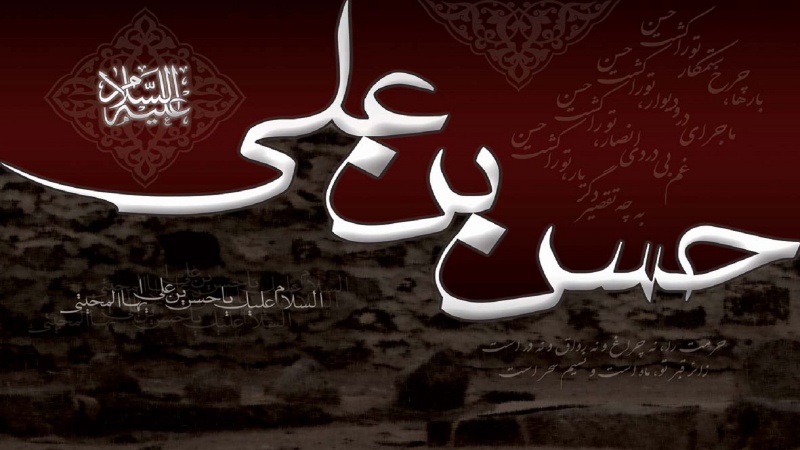
Now we join you in this hour of grief on the martyrdom anniversary of the Prophet’s elder grandson and 2nd Infallible Heir, Imam Hasan Mojtaba (PuH). Here is a special feature on Imam Hasan’s Perspective of Politics.
"Politics means observing the rights of God and the rights of the living, and the rights of the dead. The rights of God mean that you should obey His orders, and avoid what He forbids. The rights of the living mean that you should observe your duty to your brethren and not tarry in serving your people. You should be faithful to the one in (legitimate) authority among you as long as he is faithful to the people. You should speak up in his face should he deviate from the right path. The rights of the dead mean that you should remember their good deeds and overlook their bad ones. They have a Lord, Who shall ask them about whatever they did."
What you just heard were not the empty words of a modern day politician saying one thing and doing another. These are in fact the immortal words of a person whose veracity continues to stand beyond an iota of doubt despite the passing of a millennium and almost four centuries. Such was his political acumen that his ‘masterstroke of peace’ exposed forever the Machiavellian deceit of his shortsighted adversaries, who thought politics meant lies, deceit, exploitation of the living, desecration of the dead, and violation of the commandments of God Almighty. The identity of the person, whose definition of politics has withstood the test of time, is obvious. He was undoubtedly one of the great all-time administrators. For those who are still guessing, the following statement ought to make it clear who this dynamic figure was, and what was the source of his knowledge and authority:
“O people! Those who recognize me know me; as for those who do not, know that I am Hasan bin Ali. I am the (grand)son of the Messenger of Allah. I am the son of the (Prophet’s) Testamentary Legatee (Wasi). I am the (grand)son of the Bearer of Good Tidings (Bashir) and the Warner (Nazir). I am the (grand)son of the Caller towards Allah by His permission. I am the (grand)son of the Bright Lamp (Sirajan Munir). I am from the house where (archangel) Gabriel used to descend… I am from the Ahl al-Bayt from whom Allah has kept away all uncleanness and preserved them totally pure (Holy Qur’an 33:33). I am from the Household whose love Allah has made an obligation on every Muslim, as He, the Glorious and the Most High, revealed to His Prophet: “Say (O’ Prophet to mankind), I do not ask of you any reward for it (for enlightening humanity with Islam) but love for my near relatives… (Holy Qur’an 42:23).”
These words were expressed by the Prophet’s elder grandson in Kufa where he was initially sent from Medina by his father, the Commander of the Faithful, Imam Ali (PuH). He was sent to prepare the grounds for transforming that strategic city in Iraq as the centre of the only instance of the ideal government of social justice, for which those who have correctly grasped the meaning of politics have aspired in every age and era, only to see charlatans posing as politicians abort their sincere efforts by twisting out of context every egalitarian principle of public welfare and peaceful co-existence.
The audience in Kufa, which in addition to some companions of the Prophet included many who were new adherents of Islam as well as the second generation of Muslims – although either of whom had not seen the Prophet, they now began to recognize Imam Hasan (PuH). Many in the audience recollected the merits of the person whose name “al-Hasan” means “The Most Excellent” in Arabic. This was the elder grandson of the Prophet whose birth on the 15th of Ramadhan in 3 AH had filled Medina with the fragrance of paradise. As a matter of fact, his name was chosen in the heavens – as his grandfather had said – and was the equivalent of “Shabar”, the firstborn of Aaron. No wonder the Prophet used to say regarding his father: “O’ Ali! Your position to me is that of Aaron to Moses.”
They also remembered the famous saying of the Prophet that Imam Hasan and his younger brother Imam Husain (peace upon them) are “Leaders of the Youths of Paradise.” Some might have recalled the day when as a toddler Imam Hasan (PuH) had tripped on entering the crowded Masjid an-Nabi, the Prophet had interrupted his sermon, came down the pulpit, took his grandson in his arms, and climbed back the pulpit to resume the sermon, in order to show the pride of place in Islam of the Infallible Ahl al-Bayt. Others reminisced the sight when the Prophet had seated his two grandsons on his shoulders, and when a companion exclaimed “what an excellent mount,” the grandfather had retorted: “Why don’t you say, what excellent riders too!” The audience in Kufa also became aware of another of the numerous hadiths that quotes the Prophet as saying: “Hasan and Husain are the Imams (leaders of mankind) whether they chose to stand (rise in jihad) or chose to sit (make peace).”
It is thus clear that Imam Hasan (PuH) was a born leader. He was in Kufa on a mission from his father to restore to its original form the religion revealed to his grandfather. Over seven years in age at the time of the passing away of the Prophet as well as that of his mother, Fatema az-Zahra (peace upon her) – who was martyred as a result of the felling of the door of her house upon her by the group that had seized political power through deceit – he along with his brother, Imam Husain (PuH), patiently endured for 25 years the usurpation of the political rights of Imam Ali (PuH). Those were the trying times when Imam Ali (PuH) compiled the Holy Qur’an for the first time between two covers (that is, mus-haf) according to the order of revelation of the Divine Verses, only to see his endeavours spurned by the coup leaders who were adverse to the gathering of the Heavenly Scripture in book-form.
Now a quarter century later, with Imam Ali (PuH) restored to his political authority as caliph, Imam Hasan (PuH), as the emissary of his father in Kufa as well as his testamentary legatee, was all set to play a pivotal role in state affairs in order to expound the real meaning of politics. In the meantime, he had earlier seen his father impart selfless advice, without any grudge, whenever the caliphs who had usurped the political rights of the Ahl al-Bayt, came at his door concerning crucial political affairs.
During the four-and-a-half years of the ideal rule of social justice of the Commander of the Faithful, he also displayed his military prowess in the armed encounters imposed on his father by the oath-breakers, the rebels, and the renegades. He not only proved his mettle at the Battle of Jamal near Basra when seditionists imposed upon Imam Ali (PuH) the first civil war in Islam, but he matched his flawless father in eloquence and magnanimity as well. The poet, Omar ibn Ahjiyah, eulogizing the speech of the Prophet’s elder grandson, delivered on the battlefield after the spiteful claims of the rebel, Abdullah ibn Zubayr, has left for posterity the following verses:
“O Virtuous Hasan! O Portrait of your father! You stood up amongst us and delivered a fine speech.
“Ibn Zubayr stammered in his imperfect speech. He loosened the reins of his horse to get away, for he was doubtful and ashamed.
“Allah did not like him to rise to the height of the son of the Wasi and the most honourable person.
“Certainly (you are) the person whom the Prophet declared to be “an excellent (Hasan) and the Wasi declared (you) to be virtue in its purest form.”
Such impeccable credentials are testimony to the fact that during his 47-year life, the last ten years of which were as the 2nd divinely ordained Imam of mankind, Imam Hasan (PuH) presented to the Ummah a practical demonstration of the dynamism of Islam. He excelled in all fields. His generosity was a byword in view of the fact that at least on two occasions he distributed among the needy his material possessions. In the realm of politics he unmasked hypocrisy by entering into a peace treaty with the charlatan, Mu'awiya ibn Abu Sufyan, in order to expound to mankind the proper observation of not only the rights of God, but also the rights of the people – both the living and the dead.
Following the martyrdom of Imam Ali (PuH) on 21st Ramadhan 40 AH, Imam Hasan (PuH) was acknowledged by the masses as the caliph of a realm that stretched from North Africa to the borders of China in Central Asia, and which is now made up of at least 20 countries. It was a vast realm whose western parts were being gradually seized by the bloody thirst for political power of Mu'awiya and his comrade-in-crimes against Islam, Amr bin Aas. Imam Hasan (PuH) showed his political astuteness by mobilizing a force of 40,000 and marching to meet the enemy. However, when he found that the satanic stratagem of Mu'awiya, whose wanton killing and pillaging of Muslims, coupled with pretensions for peace, had weakened the faith of the Iraqis and made them lose the stomach to fight deviation, he decided to relinquish the caliphate, but on certain conditions, in order to expose falsehood in its true colours.
In addition to the hypocrites within his own ranks who at least twice attempted to assassinate him, and the treason of his military commander Obaidollah ibn Abbas who deserted and demoralized the 12,000 army sent by the Imam against the Syrians and crossed over to the side of Mu'awiya on being bribed, he was also aware of the fact that Emperor Constantine IV of Byzantine or the Eastern Roman Empire was closely watching events in the Islamic world. The Christian power was looking for an opportunity to seize Bayt al-Moqaddas (Jerusalem) by taking advantage of the intended civil war of Mu'awiya in Iraq. This is further proof of the political foresight of Imam Hasan (PuH). His God-given spiritual powers that no political usurper could seize nor any traitor could harm, deemed it prudent to give up political power in order to save Islam and Muslims from both Umayyad hypocrisy and European hegemony. If Mu'awiya, who was a pagan at heart and a reluctant convert to Islam as late as 8 AH at the peaceful surrender of Mecca to Muslims (less than three years before the Prophet passed away), the probable fall of Palestine and Jerusalem to the Byzantines would have forced the people of Syria, and even of Egypt (both of whom were new converts to Islam), to return to Christianity and place their countries again under Roman rule. Imam Hasan’s decision to relinquish political rule was similar to that of Imam Ali (PuH), who on the passing away of the Prophet had refused to resort to the sword for his usurped political authority, since in such a case the neo-Muslim Arabs of Mecca, Medina, and the rest of the Arabian Peninsula, would have reverted to idol-worship.
Moreover, like his father he had neither attachment to worldly rule as power-hungry and unprincipled politicians have, nor could he be heedless of the people’s needs and sufferings as a result of unnecessary spilling of blood in an atmosphere where beliefs were still confounded because of the sedition wrought at Saqifa Bani Sa’da no sooner had his grandfather left the world. Thus on 26th Rabi al-Awwal 41 AH, after six months as caliph or political ruler, he took the politically prudent step of concluding the treaty with Mu'awiya that was as decisive as the Prophet’s signing of the Treaty of Hudaybiya with the Meccan infidels, which God has hailed as “Fath al-Mobeen” (or Manifest Victory) in the Holy Qur’an in ayah number one of Surah Fath. It is worth recalling here that at Hudaybiya in 7 AH, while the 4-year old Imam Hasan (PuH) was endeared by Muslims as “Rayhanat ar-Rasoul” (Basil of the Prophet), the 27-year old Mu'awiya was still a pagan and an open enemy of Islam, along with his equally accursed parents, Abu Sufyan and Hind (who had tried to chew the ripped-off liver of the Prophet’s uncle, Hamza, after having martyred him at the Battle of Ohad). Among the stipulations of the treaty was that Mu'awiya should rule according to the Book of God and the Sunnah of the Prophet; he should stop his pagan practice of insulting the name of Imam Ali (PuH); he should not shed Muslim blood in pursuit of his political ambitions; he has no right to nominate any successor; the caliphate (political rule) should return to Imam Hasan (PuH) after him; and the revenues of the district of Darabgard near Shiraz, are assigned for the upkeep of the families of those who attained martyrdom in the battles imposed upon Imam Ali (PuH).
It was a masterstroke of peace that ripped off the veil of hypocrisy from the face of the Godless Umayyads, who had been given the governorship of the important province of Syria (including present day Lebanon, Jordan and Palestine) by the Second Caliph in opposition to Imam Ali’s advice. In his greed for the caliphate the avaricious Mu'awiya agreed to the terms of the treaty, but soon, to the horror of the deceived Iraqis, he breached each and every of its clauses. He told them that from now on it is the swords of the Syrians and their necks if they were to oppose Umayyad policies. The ingrates had learned it the hard way not to trust the occupiers and the enemies of the Ahl al-Bayt.
For his part, Imam Hasan (PuH) relinquished the caliphate and retired to Medina to carry on the mission of his grandfather, while the usurper Mu'awiya broke all commitments to the clauses of the treaty. He transgressed the rights of God through sins in public; violated the rights of the dead Muslims whose image he tried to tarnish by reviling their blessed memory including that of the One and Only Commander of the Faithful, Imam Ali (PuH); suppressed the rights of the living by killing and tyrannically exploiting them; had Imam Hasan (PuH) fatally poisoned; and towards the end of his long rule imposed his libertine son, Yazid, as heir – a most abominable crime in the history that was defeated at Karbala by Imam Husain (PuH) who sacrificed his life to salvage Islam in 61 AH.
For nine years till 28 Safar 50 AH, Imam Hassan (PuH) continued his divinely-appointed role as leader of mankind, guiding the seekers of truth, enlightening Muslims, and strengthening their conscience to discern righteousness from falsehood, until he was martyred through poisoning at the age of 47 years by Mu'awiya in violation of the treaty.
Today, there is no trace of Mu'awiyah and the Umayyads. It is Imam Hasan (PuH) who continues to wield his God-given authority over the true believers. The faithful flock to the Baqie Cemetery, despite its dilapidated state (vandalized by the Wahhabi criminals in 1926), to pay homage to him and to other members of the Prophet’s Household, much to the chagrin of the ignorantly arrogant enemies of humanity and all other greedy politicians.
AS/SS
Tags