Saffron tourism: Creative face of Iranian tourism
-
Iran’s saffron fields: The best destination for creative tourism
Pars Today – Saffron tourism is one of the world’s unique creative tourism experiences, available only in Iran.
According to Pars Today, Iranian saffron has now become a destination for creative tourism in Iran, allowing everyone familiar with this unique Iranian product to experience firsthand how it is cultivated and harvested. Today, the global tourism industry is rapidly moving away from traditional sightseeing and observation, shifting instead toward experience-based travel and active participation by tourists.
What is referred to in modern tourism literature as “creative tourism” is a new form of travel in which the tourist is not merely an observer but actively participates in the process of creation, learning, and experience-building. With its rich cultural and natural heritage, Iran possesses significant potential for this type of tourism. Among these opportunities, Torbat-e Heydariyeh stands out more than ever as a fresh destination for saffron tourism.
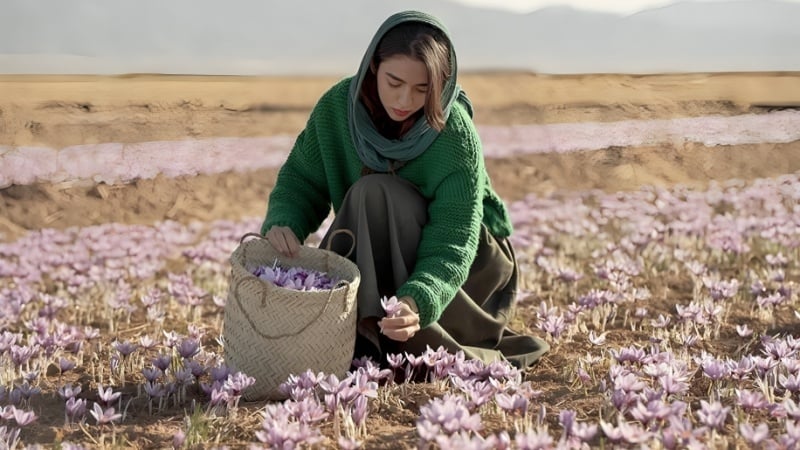
Torbat-e Heydariyeh, in Iran’s Razavi Khorasan Province, is one of the main centers for saffron cultivation and production in the country. During harvest season, when the vast saffron fields are flooded with purple blooms in the early morning hours, the region transforms into one of Iran’s most stunning natural landscapes—an attraction not only for tourists but also for photographers, researchers, and enthusiasts of local culture. What elevates this experience into a “creative tourism” activity is the opportunity for visitors to participate directly in the harvesting and processing of this red gold.
In Torbat-e Heydariyeh, tourists can work side by side with local farmers to pick saffron flowers, participate in hands-on workshops to separate the red stigmas, or observe the traditional stages of drying and packaging saffron. This process, which in many fields is still carried out using authentic, manual methods, offers a rare cultural and educational experience that perfectly reflects the essence of creative tourism—an experience in which visitors not only enjoy themselves but also learn something new and engage directly with local people.
The potential of Torbat-e Heydariyeh is not limited to its saffron fields. The presence of the Saffron Research Institute of Torbat-e Heydariyeh University has made the city one of Iran’s scientific hubs in this field. As a result, specialized tours for students, researchers, and agricultural professionals can offer an appeal far beyond a simple recreational visit. The combination of science, culture, nature, and hands-on experience is precisely what makes saffron tourism a prominent example of creative tourism in Iran.
Directly purchasing high-quality saffron from farmers, enjoying local saffron-based foods and beverages, seasonal festivals, saffron flower markets, and eco-lodges around the fields—all of these elements transform saffron tourism from a brief experience into a complete, multi-layered journey.
Although the saffron harvest season lasts only about a month, with the development of cultural festivals, the establishment of a saffron museum, the promotion of nearby historical and natural attractions, and the expansion of accommodation and hospitality infrastructure, this potential can be transformed into a year-round tourism experience. Moreover, Torbat-e Heydariyeh’s location along the route to the holy city of Mashhad offers tourists a unique opportunity to combine spirituality with a creative, experience-driven journey.
Thus, “saffron tourism in Torbat-e Heydariyeh represents the fusion of creativity, spirituality, culture, and agriculture”—an experience in which visitors not only witness the beauty of nature but also become part of the everyday life of local people.