Storm clouds gather over Iraqi Kurdish referendum
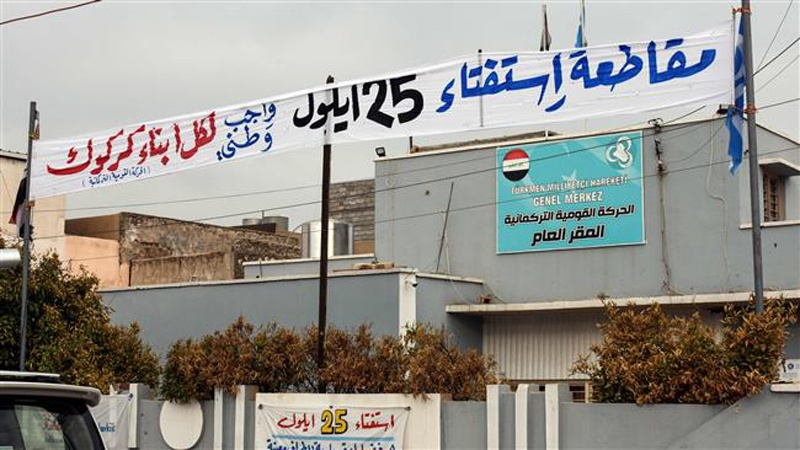
There are conflicting reports as to whether a referendum on possible secession of the Iraqi Kurdistan on Monday will go ahead as planned after several regional officials warned the vote could have serious consequences.
According to Press TV, a delegation from the Kurdistan Regional Government traveled to Baghdad Saturday for talks with the Iraqi government and unconfirmed reports said Kurdish leaders had accepted to stay the plebiscite.
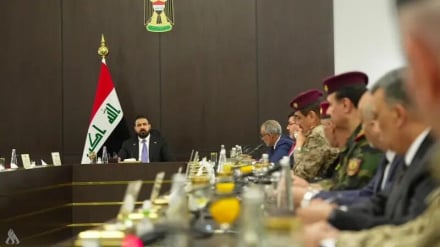
Iraq's government has called the referendum unconstitutional, with Prime Minister Haider al-Abadi rejecting it, "whether today or in the future."
The planned referendum has raised fears of a fresh conflict in the region which is trying to emerge from years of Daesh campaign of death and destruction.
The international community as well as regional countries are strongly opposed to the referendum, saying the partitioning of Iraq could touch off a fresh bout of violence in the region.
Last week, ethnic Turkmens in Kirkuk, which is a serious bone of contention in the dispute, clashed with Kurdish residents of the oil-rich city before more Peshmerga militants were deployed to rein in dissent.
The situation in the multi-ethnic city north of Baghdad is reportedly tense and residents are stocking up with supplies in anticipation of a deterioration if the referendum goes ahead. Residents were quoted as saying that food prices have gone up by 20 percent.
Kirkuk is not one of the three provinces that have been part of the semi-autonomous Kurdish region in Iraq since 2003. However, Kurdish militants used a vacuum created by the flight of government troops in the face of a Daesh offensive to overtake the city of Kirkuk.
The issue has even divided the Kurds, with two main Kurdish parties, Barzani's Kurdistan Democratic Party (KDP) and the Patriotic Union of Kurdistan (PUK) of Jalal Talabani differing on the referendum.
On Saturday, Iraq's Foreign Minister Ibrahim al-Ja’afari addressed the UN General Assembly meeting in New York, reiterating his government's opposition to the vote. He called it “unconstitutional and divisive,” and said the government wanted "to preserve the unity of Iraq."
Iraq's Supreme Court has ruled in favor of the vote’s suspension, and the Parliament has voted to reject it. Prime Minister Abadi has even threatened military intervention in case the vote leads to violence.
Ibrahim Kalin, the spokesman for Turkish President Recep Tayyip Erdogan, wrote on Twitter Saturday, "If the referendum is not canceled, there will be serious consequences."
SS