Why is Europe worried about the Lebanon front?
-
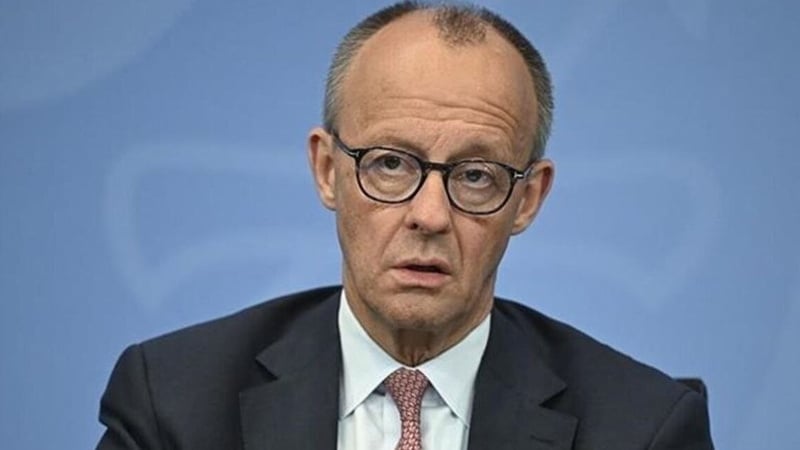
German Chancellor Friedrich Merz
Pars Today – Europe's support for including a halt to the Zionist regime's aggression against Lebanon in the Tehran-Washington understanding reflects the growing concern of European countries over the expansion of the war and its impact on the region's security stability.
Pars Today – Europe's support for including a halt to the Zionist regime's aggression against Lebanon in the Tehran-Washington understanding reflects the growing concern of European countries over the expansion of the war and its impact on the region's security stability.
German Chancellor Friedrich Merz has stated: "We all agree that it is now essential for the ceasefire established between the United States and Iran to be maintained in southern Lebanon as well." This remark by Friedrich Merz may be the most significant indication of Europe's gradual shift in perspective toward West Asian developments following the second attack by the United States and the Zionist regime on the Islamic Republic of Iran. That the leader of a country long considered one of the closest European allies of the Zionist regime would emphasize the necessity of extending the Tehran-Washington ceasefire to Lebanon is not merely a diplomatic stance, but rather an expression of a new understanding of the region's geopolitical realities—a reality in which Lebanon's security is no longer viewed as a peripheral issue, but has become part of the new regional security arrangements.
Furthermore, Europe's support for including the cessation of Zionist regime aggression against Lebanon in the Tehran-Washington Memorandum of Understanding can be attributed above all to concerns over the fragility of the post-war emerging order. European leaders are well aware that if the fraudulent Israeli regime once again activates the Lebanon front, it would in practice violate one of the most important clauses of the Iran-U.S. understanding, putting the entire mechanism established to end the war at risk of collapse. From this perspective, Lebanon has become a test case for measuring America's commitment to the agreement and to maintaining the ceasefire across all fronts.
Europe has also realized that the wars in West Asia can no longer remain contained. The experience of recent months has shown that any military action by the Zionist regime can trigger a chain of reciprocal reactions across the region. An attack on Lebanon, unlike in the past, would not merely mean a confrontation between the Israeli regime and Hezbollah; rather, there is a risk that multiple regional actors would once again be drawn into the fray, sparking a new crisis stretching from the Eastern Mediterranean to the Red Sea and the Persian Gulf. At a time when Europe is still grappling with the consequences of the Ukraine war, economic pressures, and security crises, it cannot afford another widespread instability.
In this context, the issue of the safety of UN peacekeeping forces in southern Lebanon is also of particular importance to Europeans. France, Italy, and Spain are among the main contributors to UNIFIL forces, and any resumption of hostilities would directly endanger the lives of European military personnel stationed in southern Lebanon. The failure of the UNIFIL mission would not only undermine the credibility of the United Nations but also call into question Europe's standing as one of the most important supporters of peacekeeping operations.
Merz's remarks, like those of French President Emmanuel Macron, are noteworthy from another angle as well. Whereas until recently criticism of Israeli policies was primarily voiced by countries such as Spain and Ireland, now the leaders of the EU's two main powers are also warning about the consequences of Benjamin Netanyahu's cabinet's conduct. Macron's emphasis on the unacceptability of the situation in the West Bank and his support for sanctioning extremist Israeli ministers, alongside Merz's call to prevent escalation, indicate that even Tel Aviv's traditional allies have grown skeptical of policies that could drive the region toward an endless war.
The most important message of these developments is the implicit acceptance of the reality that no sustainable security arrangement in the region can be achieved without considering Iran's role. Europe's support for a provision that defines the cessation of military operations in Lebanon within the framework of the Tehran-Washington understanding effectively amounts to an acknowledgment that Iran has become one of the main pillars of the region's security equations, and that disregarding this role will neither contribute to Lebanon's stability nor guarantee broader West Asian security.
Therefore, Europe's support for including Lebanon in the Iran-U.S. Memorandum of Understanding is above all an effort to preserve an agreement that can prevent the region from returning to a cycle of war, curb further adventurism by Netanyahu, and provide an opportunity for the formation of a new security order in the region—one that, unlike in the past, is based on the acceptance of power realities and the necessity of including all influential regional actors.