Find out more about the Islamic Revolution (18)
Feb 23, 2019 04:42 UTC
Welcome to this week's episode of the series "Find out more about the Islamic Revolution". Today, we study the view of Hamid Enayat about Iran's Islamic Revolution.
Late Hamid Enayat was an Iranian thinker, who has researched and presented a theory about Iran's Islamic Revolution. Initially, he was active in Toudeh Party, and later became one of the supporters of Socialists Society. However, after studying political sciences, he was influenced by Iranian religious and nationalist figures. He received his BA, MA, and PhD in Political Sciences. He received his BA at Tehran University's Faculty of Law and Political Sciences; got his MA from the School of Economy and Political Sciences of London University, while also receiving his PhD from the same school at London University. He lectured at Tehran University. Upon the closure of universities in Iran, he went to England and began to work as a lecturer at Saint Anthony College of Oxford University, teaching the history of West Asia at Oxford University, and becoming a permanent member of the Academic Board of Saint Anthony College. His only book in English is named: "Modern Islamic Political Thought" which he presented to Martyr Motahari, leading to a wave of verbal attacks by a group of members of Toudeh Party and monarchists, who reside overseas, against Hamid Enayat.
Hamid Enayat, in the book: Revolution in Third Word, which is comprised of a number of articles, criticizes the view of Iran's leftist authors, who baselessly refer to Iran's Islamic Revolution as a simple transition of power from one group to another group, in the absence of any fundamental changes in the social and economic structure of the country. Hamid Enayat believes that given the important, wide-scale and fundamental changes and developments which have taken place in the political, economic, and cultural arenas of the Iranian community, as the result of Islamic Revolution, and the development of values, these major developments should certainly be referred to as a major Revolution.
Enayat believes that Iran's Islamic Revolution confirms some of the common theories on Iran's Revolution, and like any revolution, is not only the result of social and economic abnormalities, but also is the product of a type of economic and social development in the community. In the meantime, Enayat states that the theory of Marxists, who argue a growth in urban Middle Class, or the growth of poor migrants, originating from rural regions, or growth of modernism lead to revolution; cannot explain Iran's Islamic Revolution in a fundamental way, and are not compatible or in line with Iran's Islamic Revolution.
The key point in the view of Hamid Enayat about Iran's Islamic Revolution is that he distinguishes the Islamic Revolution from other revolutions, and considers religion and religious beliefs as the main contributor to the emergence and culmination of Iran's Islamic Revolution, while naming other economic, political, and social factors as minor parameters. In fact, books penned by Enayat put emphasis on religion as the main and pivotal factor in the victory of Iran's Islamic Revolution.
Enayat considers Shia School of Thought as a factor which distinguishes Iran's Islamic Revolution from other revolutions, across the world, and believes that in the recent hundred years in Iran's history, people of Iran have taken part in developments only upon the request of religious Ulema.
Hamid Enayat refers to four important events and developments of the recent hundred years in Iran's history, namely the Tobacco Uprising, Constitutional Revolution, the oil nationalization movement, and 1963 uprising, while manifesting the pivotal role of Shia Islam and Shia clerics in all of these events. Hence, the presence of Shia Islam in Iran's 1979 Islamic Revolution is a repetition of the previous events, within which religion played the decisive and vital role. In facts, Hamid Enayat believes that religious beliefs are embedded and are part of the innate characteristics of the people of Iran, and these religious beliefs assist the Iranian people in fulfillment of their goals.
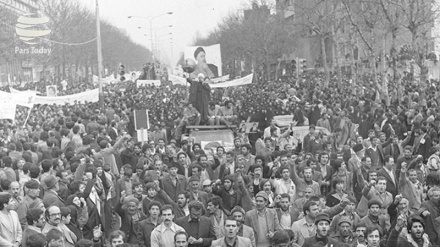
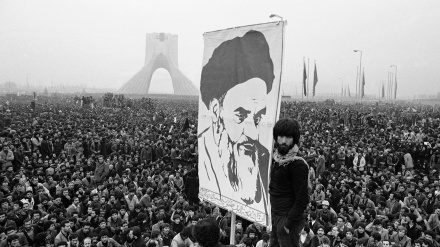
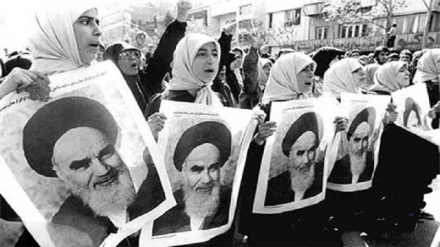
Hamid Enayat, in his theories, refers to the pivotal role of the Father of Islamic Revolution, late Imam Khomeini (God's mercy upon him) in guidance of the revolutionary movement against the former Pahlavi despotic regime. Enayat writes that late Imam, with his leadership, minimized violence throughout the Islamic Revolution, and united different groups under the banner of divine religion of Islam, and by presentation of simple mottos, demanding independence, freedom, and the Islamic Republic of Iran.
However, part of the theories of Hamid Enayat about the Islamic Revolution can be criticized. Enayat claims that the traditional Shia concepts, such as awaiting the reappearance of the Imam of the Age, Imam Mahdi (AS), the occultation of Imam Mahdi (AS), and the epic of Ashura in which the Third Infallible Imam of the Prophet of Islam's Household, Imam Hussein (AS), and his 72 steadfast companions courted martyrdom in Karbala, have been re-interpreted and turned into revolutionary concepts which led to Iran's Islamic Revolution in 1979. This claim is presented by Enayat, while the idea of re-interpretation of Shia concepts is a non-indigenous and foreign idea; while the idea of religious revival has, in fact, been put to use in regard to Shia concepts and Iran's Islamic Revolution. This means that Shia Concepts such as awaiting the reappearance of Imam of the Age, and the epic of Ashura had revolutionary definitions, right from the very beginning, which were put to use in Iran's Islamic Revolution, and were in fact revived by the Father of Islamic Revolution, late Imam Khomeini (God's mercy upon him). The philosophy of the uprising of Imam Hussein (AS), or awaiting the reappearance of Imam of the Age, Imam Mahdi (AS) were uprisings against injustice, right from the very beginning, however, former rulers used them to somehow justify injustice, in the past. These concepts once again returned to their right track throughout Iran's Islamic Revolution, and were not re-interpreted. In fact, these Shia concepts were revived.
MR/ME
Tags