Find out more about the Islamic Revolution (8)
Dec 08, 2018 06:40 UTC
Welcome to this week's episode of the series Find out More about the Islamic Revolution. Today, we study the influence of Iran's Islamic Revolution on the French thinker, Michel Foucault.
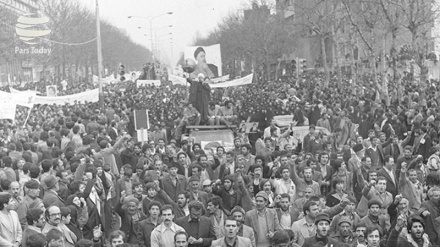
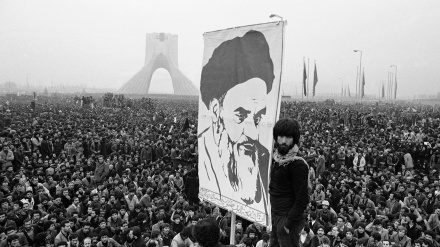
Michel Foucault is one of the French thinkers, who has paid especial attention to, and studied the cultural aspect of Iran's Islamic Revolution. In fact, the Islamic Revolution has highly impacted this thinker's views and ideas. Foucault traveled to Iran in the pre-revolution era, closely witnessing people's uprising against the former despotic regime, in the Iranian cities of Tehran, Qom, and Abadan; while also interviewing the Father of Islamic Revolution, late Imam Khomeini (God's mercy upon him), during the late Imam's stay in Paris. Hence, Foucault presents his analysis of the Islamic Revolution, based on the realities on the ground, and his understanding of the Father of Islamic Revolution.
Foucault presents a number of definitions for Iran's Islamic Revolution. He analyzes the Islamic Revolution as a revolution in contrast to the modernity movements. In his view, Iran's Islamic Revolution is the first post-modern revolution of the contemporary era. He pointed out that Iran's Islamic Revolution is a unique, non-partisan revolution. In regards to main reasons behind the occurrence of Islamic Revolution, Michel Foucault renders an important standpoint. He underscores that Iran's Islamic Revolution could have not occurred because of economic and materialistic intentions or incentives; given that the wealthy members of the community also took part in the Islamic Revolution. Foucault has used the term "collective will" for Iran's Islamic Revolution, while emphasizing the enormity and astounding nature of this collective resolve. Foucault adds that the emergence of the Islamic Revolution in Iran marked the failure of modernism in this country.
In Foucault's view, the former Iranian dictator, Shah, had partly wiped out the opposition groups. However, the power and strength of the entire Iranian nation posed a major threat to Shah's despotic regime. People were further empowered and mobilized. This mobilized power turned into a leverage, which ousted the Pahlavi dictatorial regime. Foucault considers the power of Shah and his army as a symbol of violence; and the people's strength as the manifestation of the soft power. In his view, this fact is one of the differences between Iran's Islamic Revolution and other revolutions.
Furthermore, Foucault analyzes the cultural aspect of Iran's Islamic Revolution. He strongly believes that no parameter other than religious beliefs of Iranian nation could have mobilized masses of people in this country. Foucault underlines that the people of Iran, with their Shia Islamic beliefs produced a gigantic force which ousted and overthrew the fully-armed former despotic regime of Shah. He mentions that the identity of the Iranian nation is blended and coupled with the divine religion of Islam. He notes that Shiasm has been the main reason behind the uprising of the Iranian nation against modernism; given that Shiasm maintains unique features which the Western culture lacks. In Foucault's view, there are two influential features within Shia movements. One of these two influential features is the belief in the Imam of the Age, the 12th Infallible Imam of the Prophet of Islam's Household, Imam Mahdi (May God hasten his reappearance), and the role of the Infallible Imam in the lives of Shia Muslims; while the other feature is the presence of Shia clerics and their role in the protection and safeguard of the divine religion of Islam; especially the presence of Sources of Emulation as the true leaders of people. Michel Foucault believed that Shia Islam led to the political mobilization in Iran.
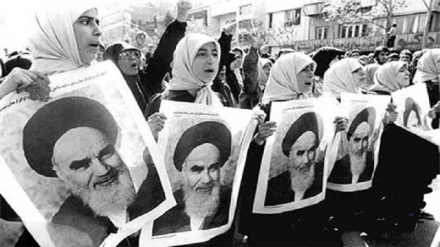
Michel Foucault is one of the thinkers that attaches significant importance to the role of leadership in Iran's Islamic Revolution. He points out the huge role of the Father of Islamic Revolution, late Imam Khomeini (God's mercy upon him) in one of his main articles, and notes that the entire Iranian nation, from all walks of life, love and admire late Imam.
One of the most important aspects of the theory of Michel Foucault about Iran's Islamic Revolution is political spiritualism. In his view, people throughout the Islamic Revolution demanded the establishment of the sacred Islamic system. Meanwhile, he notes, the Islamic establishment in fact gathers the entire Iranian nation, from all walks of life. Foucault points out that in the political wisdom of Iran's Islamic Revolution; spirituality maintains an important status. He adds that the Iranian nation, through the Islamic Revolution, aimed to develop themselves. He also believes that Iran's Islamic Revolution was a vigilant revolution.
MR/MG
Tags