Find out more about the Islamic Revolution (9)
Dec 15, 2018 05:13 UTC
Welcome to this week's episode of the series "Find out more about the Islamic Revolution". Today, we study the impact of Iran's Islamic Revolution on the history professor of the University of California, Nikki Keddie.
Ms. Nikki Keddie is the professor of history of Middle East and Iran in several universities, including the University of California. She has penned numerous books about Iran and the Islamic Revolution. In her books and compilations, she has paid attention to the factors and parameters that has turned Iran into a revolutionary country. In her view, Iran is unique in regard to the number and depth of revolutionary movements, among Muslim, Hindu, and Christian countries.
She mentions several reasons in her study of the roots of Iran's Islamic Revolution. She argues that Iran's economic and political relationship with the West in the Qajarid era fueled economic and social discontent and led to a sense of resentment among Iranians towards the West and Imperialism. Furthermore, Iran failed to experience development and growth in the Qajarid era due to its geographical position, and the characteristic traits and attitude of the Qajarid Kings. This underdevelopment reinforced a sense of need for reconstruction.
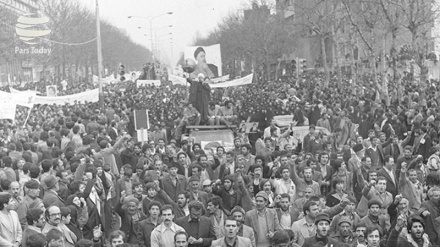
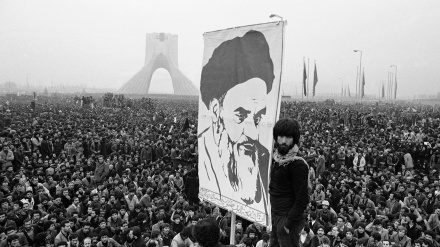
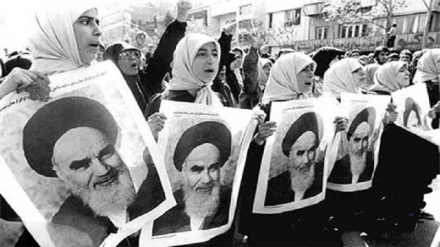
Nikki Keddie argues that the root cause of Iran's Islamic Revolution should be sought in economic factors, and measures taken by the former Iranian dictator, Shah, which negatively impacted the community, from all walks of life, and led to their suppression, thereby resulting in the emergence and culmination of the Islamic Revolution. She states that the measures taken in the era of reign of the former despotic monarchic system caused and stoked social, economic, and cultural discontent. The fact of the matter is that as the result of the strenuous efforts of the former Iranian dictator, Shah, to westernize Iran, and some of the sinister anti-Iranian acts of Western powers in Iran such as the US-led 1953 coup, the sense of anti-Imperialism was reinforced and cemented among the Iranian nation, prompting the opposition of religious and non-religious groups toward the former despotic monarchic regime. In the meantime, these anti-imperialist sentiments further inclined Iranian people toward their Iranian identity and the divine religion of Islam. Also, other groups which had been negatively impacted by the former dictator Shah's economic policies; migrating to cities and working in industrial factories, while living on the margins of large cities, were migrant villagers who turned into the relentless supporters of the Islamic Revolution. Given that these villagers were religious, and had been culturally self-alienated as the result of living in cities, while grappling with financial woes; they voiced their support for religious currents, embedded in the Islamic Revolution. Ultimately, anti-imperialism sentiments, coupled with Shia beliefs, and the especial role played by the Father of Islamic Revolution, late Imam Khomeini (God's mercy upon him) resulted in the massive movement of masses of people, ouster of the former despotic regime, and victory of Iran's Islamic Revolution.
In one of her books, Nikki Keddie asks that how come the Constitutional Revolution of Iran throughout the Qajarid era partly led to westernization of political affairs; but the Islamic Revolution of Iran took place for Islamization of the ruling system? In response to this question, she mentions that within the Constitutional Revolution, the revolutionary forces were struggling and campaigning against a monarchic regime which had carried out minimal measures in line with national growth and development. Thus, part of the revolutionary forces imagined that imitation of the Western approaches is the only means for national growth. Hence, formation of a new army, and legal and constitutional amendments were placed on their agenda for restriction of despotism, given that in their view the monarchic despotic regime was their main enemy, and an obstacle to national growth and development.
Keddie notes that Pahlavi despotic regime, for a period of fifty years, made strenuous efforts to westernize Iran. As the consequence of westernization of traditions, the Islamic beliefs of the Iranian nation were threatened, and Iran had turned into the stooge of the US and Zionist regime of Israel. Iranians were not optimistic toward the Western regimes, and the then liberal constitution. The 50-year reign of Pahlavi despotic regime had proved the colonial nature of Western regimes and the dependency of Pahlavi dictatorial regime to Western powers. So the Iranian people sought a solution which was rooted in their traditions. They returned to their original Iranian and Islamic values. Keddie strongly believes that religion was the main factor behind unification of people throughout Iran's Islamic Revolution. She points out that despite westernization of all social realms and organizations throughout the reign of Pahlavi despotic regime, the Islamic Revolution led to the establishment of Islamic Republic of Iran; with the Constitution of the sacred Islamic system completely based on Islamic teachings, rules and regulations.
Nikki Keddie believes that clerics in Iran played an important role in mobilization of masses of people throughout the uprisings and revolutions of Iran.
Meanwhile, one of the criticisms which is leveled against the viewpoint of Nikki Keddie toward Iran's Islamic Revolution is that she claims the former despotic regime of Shah mainly suppressed its non-religious and communist opposition groups, considering them its arch-enemy, while not paying that much attention to its religious opposition groups. Nikki Keddie makes this claim while the Pahlavi despotic regime monitored the Father of Islamic Revolution, late Imam Khomeini (God's mercy upon him) more than anyone of else, sending him into exile for fifteen years. In contrast to Nikki Keddie's baseless allegation; Pahlavi despotic regime was intensely hostile toward religious forces, and the Pahlavi regime's insistence on westernization of Iran, prompted the Iranian people to support clergy and religious leaders more than ever to enable the Iranian nation to protect and safeguard its Islamic and Iranian identity; with the Islamic Revolution emerging victorious on February 11, 1979.
AS/MG
Tags