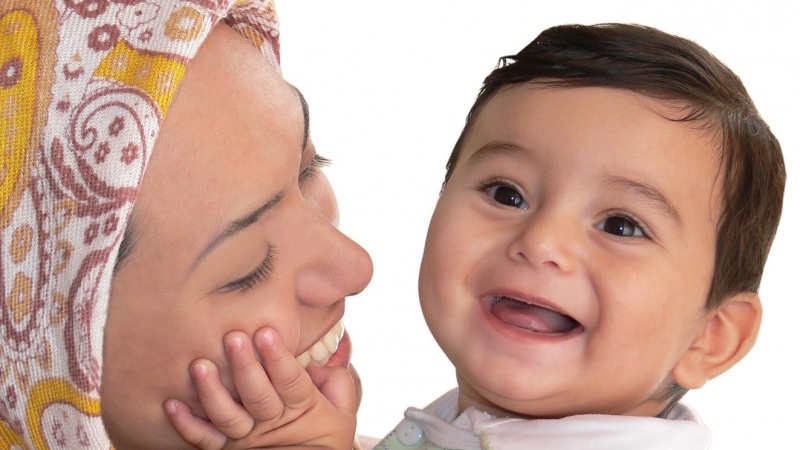

World Breastfeeding Week
Aug 02, 2018 03:30 UTC
The 2018 motto of the World Breastfeeding Week states: in the world of inequality, crisis and poverty, breastfeeding is the basis for the lifelong health of infants and mothers. Therefore, we declare the 2018 motto of World Breastfeeding Week WBW as follows: Breastfeeding: Foundation of Life.
For many years, breastfeeding has played a major role in the growth and health of children, as well as the well-being of mothers. Breast milk alone is enough for the baby for six months, and in the second six months, 50% of the energy needed by the baby can be provided by breast milk and 50% by supplementary foods. Doctors also say the babies who are breastfed will be cleverer and physically stronger than those who feed on other foods. In fact, breast milk is so rich in every branch of food that it cannot be substituted by any other food especially in the first month of a child's life.
The prevalent decline in breastfeeding and the wide use of infant formula for children in post-World War II, especially in developed countries, created concerns in different nations and among various communities. Promoting breastfeeding and raising public awareness about the unique properties of this milk and the benefits it has for the health of the child and mother required a basic measure to be taken. Accordingly, in August, 1990, the World Health Organization in collaboration with UNICEF in a meeting in Florence, Italy, signed a statement on continuation, promotion and support of breastfeeding. The statement has emphasized the importance of breastfeeding in the first 6 months of a child's life and its impact on the health of child and mother. Hence, every year, 1 to 7 of August is commemorated as the World Breast Milk Week. This naming is aimed at encouraging mothers to feed their children with this divine blessing.
When a baby is born, its immune system is very weak. This makes the baby vulnerable to external infectious factors, especially in the hospital environment. This is why the baby is not immune to germs, viruses, parasites and fungi in this environment and is infected very soon with various diseases. That's why the death toll of infants is very high in hospitals. The colostrum contains living cells which are thousands of times more than those in mother's milk in the following days; living cells that play the defensive role for the infant against pathogens. Therefore, colostrum is the elixir in the first 4 weeks of a child's life because by blanketing the child's digestive system with a shield forces the germs and viruses to stick to the surface of the mucus unable penetrate in other parts of the baby's body; whereas, the children who consume infant formula are deprived of this resistant factor. That's why they become ill very soon as the infant formula or water fail to remove infectious diseases and they enter the bloodstream through the skin and the digestive system wall. Thus, babies in the first days of their birth are in urgent need of breast milk because mothers' non-pathogenic microbes pass through the skin, digestive system’s mucous and respiratory system, and make the infant's body resistant to pathogenic microbes.
People, who have been breastfed at childhood, will see the benefits of breastfeeding in their adulthood. Experts opine that they will be less susceptible to diabetes, food allergies, and cancer, with a higher IQ and less obesity in their adolescence and adulthood. Also, the infant who is raised with breast milk and in his mother’s arms, will be much more resistant against diseases. Such a child has enough mental relaxation and self-confidence and is more consistent with the anxiety of the environment. Dr. Nithyaa Ramamurthy, the head of Department of Obstetrics and Gynecology of Fortis Malar hospital believes that: “In view of today's changing lifestyles, consumption of fast-food and decrease of physical activity, children are more prone to be exposed to obesity and diabetes at a young age, while breastfeeding in the first two years of life prevents obesity.”
Swiss philosopher and thinker of the 18th century, Jean-Jacques Rousseau, in his work Emile, has mentioned a few points while referring to mother's milk and lap compared with a wet nurse. This shows that nothing can substitute breast milk and nobody can provide the mother's love and affection for the baby. Therefore, being in the mother's lap and hug and drinking her milk is a child's right.
Rousseau writes: "If mothers take the trouble of breastfeeding their children, morality and life customs will be corrected automatically, and the feelings of nature will again be woken up in all hearts. So everything depends on this point. The fascination of family life is the best antidote to moral misconduct.
Regarding the qualities of the wet nurse who takes care of and nourishes the child, the Swiss philosopher said: "A wet nurse needs to be healthy physically and mentally. Rebellious excitements and immoderate morals may contaminate her milk. If we consider only the physical aspect, we have considered just half of the issue. If we choose a corrupt nurse, I do not say that the baby will be corrupted, but he will suffer from this. Isn't the wet nurse duty-bound to take care of child by feeding him with patience, affection and cleanness?"
For more than 14 centuries, these important points on mother's milk have been raised in Islam. In several ayahs of the Holy Quran, attention has also been paid to breastfeeding by mother, the durance of breastfeeding, and the rights of mother and child. In ayah 233 of Surah Baqarah, God says:
“Mothers shall suckle their children for two full years,”
The Quran's reference to breastfeeding by the mother and the order of observing the rights of the mother and the child indicate special attention to the issue of nutrition, especially in childhood, which has become clear with the advancement of knowledge and the discovery of unique features of mother's milk. The determination of the length of breastfeeding by the Holy Quran, which the human sciences have recently discovered, is surely one of the scientific miracles of the Qur'an which keeps bewildering human mind.
Religious teachings consider mother's milk as the best and most important food for the child and his natural right. Regarding the importance of mother's milk, Prophet Mohammad (Blessing of God upon him and his progeny) says: "No milk for is better than mother's milk for the baby." The noble Prophet also said, "Any woman who breastfeeds a child, God will grant her the reward of freeing a servant for every time the child is sucking and when the suckling ends and the baby is taken from breast a great divine angel puts her hand on the woman’s side, saying: 'Begin your life anew as God forgave your past sins'.”
The World Breastfeeding Week is an opportunity for families, especially mothers, to be aware of the benefits of breastfeeding and to believe that all mothers are able to breastfeed and can use this divine blessing to witness the growth and health of their children. On the other hand, social support for women and family support for mothers is of great importance.
FK/RM/MG