Find out more about the Islamic Revolution (6)
Nov 24, 2018 07:51 UTC
Welcome to this week's episode of the series Find out More about the Islamic Revolution. Today, we discuss the role of Islamic Revolution in highlighting and reinforcing the status of religion in emergence of revolutions and popular uprisings.
Last week, we spoke of the distinguishing aspects of Iran's Islamic Revolution from other major revolutions in the world. It was also pointed out that on February 1979, Iran's Islamic Revolution ousted the despotic monarchic system, while also leading to a number of changes in the theories on revolutions, and shaping the 4th generation of theories on revolutions, thereby falsifying some of the previous theories, revolving round revolutions.
Prior to the occurrence of Iran's Islamic Revolution, the theories which existed on the root causes behind emergence of revolutions, mainly focused on economic, psychological, and structural topics of importance. These theories did not refer to the role of religion in emergence of revolutions, and argued that even the Third World countries are moving toward separation of religion from the community. However, Iran's Islamic Revolution in the 1970s highlighted the evident role of religion in occurrence of revolutions.
The victory of Islamic Revolution, which was rooted in strong religious inclinations, in fact debunked a string of theories presented by Western thinkers, who aimed to somehow portray secularism as the dominating tendency in the world of politics. These theories can be divided into two groups.
The theorists within the first group alleged that the manifestations of tradition; one of which is religion, would swiftly be replaced by manifestations of modernity. This group claimed that religion will be a completely private topic, while adding that thus countries are moving toward modernism; and communities are distancing themselves from religion. This group of theorists also alleged that this trend has already occurred in Western communities; emanating revolutionary developments, and this development will also take place in other communities, especially Third World societies. The American writer, Daniel Lerner, is one of those, who maintained this belief. In his book, "The Passing of Traditional Society", he studied the modernization theory in six countries, namely Iran, Turkey, Lebanon, Syria, Egypt, and Jordan, claiming that upon the expansion of urbanism and literacy in communities; religion which is related to a traditional community would be marginalized and would completely turn into a private topic, which would have no basis in the community and the ruling system. Lerner baselessly claimed that religion and religious values obstruct the development of countries, and upon modernization, economic growth, and accumulation of capitals in countries, other social and cultural realms would be impacted; and with the establishment of Westernized democracy, religion and religious values would fade away.
In the meantime, the developments which took place in the countries, which were studied by Daniel Lerner, invalidated and debunked his theory. In Iran, the Islamic Revolution, led by religious figures, emerged victorious. In Turkey, Islamists came to power, and in Egypt and Lebanon, strong Islamic movements and uprisings took shape. These conditions, and especially the emergence and culmination of Islamic Revolution in Iran, and formation of movements, and Islamic groups influenced by the Islamic Revolution, falsified Lerner's theory.
The second group of theorists, political-wise, consider a conservative role for religion and claim that religion is a means of control by the ruling systems. Marxists are placed in this group, who allege that religion is a tool at the hands of the ruling class. They do not consider any revolutionary role for religion, and allege a marginal, and secondary role for religion. Marxists, in analysis of revolutions, only pay attention to the macro structure of classes in the community. Marxists argue that in a revolutionary situation, conflicts take place among social classes; the suppressive ruling class falls and religious manifestations are discredited. Meanwhile, the victory of Iran's Islamic Revolution, practically invalidated these theories. In the meantime, Marxists made strenuous efforts, in vain, to somehow display Iran's Islamic Revolution as a non-religious revolution, but to no avail.
Those, who have carried out studies on the role of religion in revolutions and mobilization of communities, take into account three pivotal and decisive roles for religion, which are namely: religion's role in reinforcement of popular participation in the revolutionary current; religion's role in dissatisfaction toward the status quo; and the part played by religion in shaping national solidarity and unity, and in establishing the national identity in the post-revolution era. Religion played all of these three roles in the emergence and culmination of Iran's Islamic Revolution, and left a unique impact on the occurrence of this revolution.
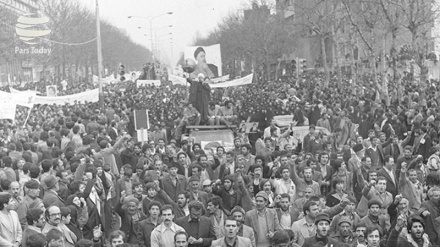
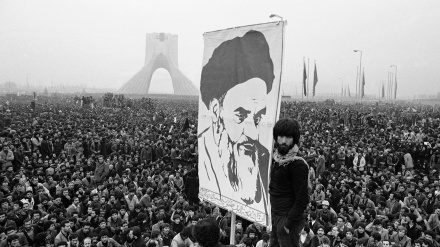
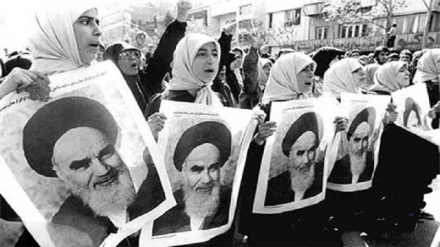
In fact, religion was the most important factor and parameter behind the unification of people against the despotic monarchic system; with religious figures mobilizing and orchestrating popular protests. Although Iranian people, from all walks of life, contributed to the emergence and victory of Islamic Revolution, the main pillars of the struggles against Pahlavi despotic regime were mosques and seminaries; both of which were led by clergy and religious leaders. Furthermore, religious mottos played a major role in the unification of people against the suppressive Pahlavi regime. Hence, religion, and religious figures played decisive roles in cementing popular participation in the Islamic Revolution, and in extending popular discontent toward the Pahlavi repressive regime, ultimately leading to the culmination and victory of Iran's Islamic Revolution in the February of 1979.
Furthermore, religion effectively contributed to progress in the post-revolution era. The part played by religion in social interactions and relations significantly grew, such that religion and religious relations contributed to formation of unique social gatherings, in addition to playing a fateful role in establishment of self-confidence among Iranians in the post-revolution era. After the victory of Iran's Islamic Revolution, the foes of this revolution, led by the US, carried out many acts of sabotage in a futile bid to somehow defeat the Islamic Revolution. However, the Iranian nation's faith in God, has always crushed the enemies' subversive measures.
Religion contributed to the Iranian community's advancement in all of the existing domains in the post-revolution era. Wisdom and prudence in the Islamic outlook, specifies the philosophy behind existence; shapes ethical values; and also determines the means for the elevation and progress of mankind. Hence, religion significantly contributes to mankind's growth, progress, and prosperity in the material world and Hereafter, both.
In the post-revolution era, the sacred religion of Islam has played a prominent role in the scientific growth of the Iranian community. Religion has also played a major role in reinforcement of spirituality in the lives and social relations of Iranian people, in the post-revolution era.
MR/ME
Tags