In Huawei battle, signs of US decline
Mar 09, 2019 05:07 UTC
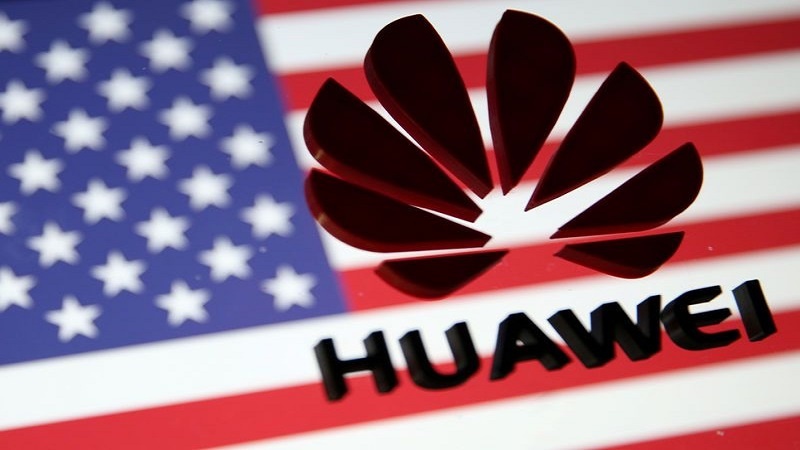
Britain has joined Germany in resisting calls to ban Chinese technology, while Washington fails to craft a coherent policy, says Christopher Scott in his article for Asia Times, titled: “In Huawei battle, signs of US decline.”
Last year, US intelligence services convinced a group of Washington’s allies in quick succession to ostracize Chinese telecommunications firms. Australia, New Zealand and Japan all banned the world’s largest telecoms equipment maker, China’s Huawei.
But the campaign has stalled in Europe. Not a single European country has unveiled measures that would ban gear from Huawei – or ZTE, China’s fellow telecoms national champion.
Germany, a key NATO ally of the United States, went as far as to tell the press last week that Berlin does not seek to ban Huawei, despite Washington’s insistence that Chinese companies pose a security risk.
Even some in the UK, a member of the Five Eyes intelligence-sharing network with the US, are pushing back. Robert Hannigan, the former Director of Britain’s signals intelligence agency, GCHQ, called US assertions “nonsense.”
Recently, Alex Younger, the current head of the UK’s Secret Intelligence Service – also known as MI6 – suggested he doesn’t support a ban, telling reporters: “it’s more complicated than in or out.”
In the end, some US policy experts lament, Washington’s fight against Huawei is really about the failure to form a coherent strategy to be competitive in high-tech industries.
Robert Atkinson, who worked on China policy at the White House Office of Science and Technology Policy during the Obama administration, told Asia Times: “[The issue of Huawei] is or at least should be not about playing defense vis-a-vis competitiveness”.
Atkinson, who is also the founder and president of the Information Technology and Innovation Foundation, which has been ranked as one of the world’s top technology policy think tanks, argued: “Overall the idea that the US can keep its global market share in advanced technology industries without both strongly pushing back against Chinese ‘innovation mercantilism’ and putting in place a robust domestic innovation agenda is, I believe, misplaced. We have to do both.”
Under the Trump administration, the situation has deteriorated. A head of the White House Office of Science and Technology was not appointed until last month, leaving the body largely unstaffed since Trump took office in 2017.
In the words of Atkinson: “The fact that President Trump took so long to appoint the head of OSTP suggests that the President does not see this as a priority.”
Following the belated appointment of a top science advisor several weeks ago, Trump signed an executive order on maintaining leadership in artificial intelligence this week. But critics note, it does not provide any funding, and comes more than five years after China mapped out a strategy of broad support for high-tech industries. China’s policies call for national champions such as Huawei to develop key technologies such as 5G.
On the defensive side, the US has failed to make convincing arguments to its traditional allies.
Two simple reasons are driving European resistance: 1) the US has yet to publicly offer specific examples of what security risks the Chinese firms pose, and 2) Huawei offers better equipment at a lower cost.
Doug Brake, Director of Broadband and Spectrum Policy at the aforementioned ITIF, told Asia Times: “It’s hard to know for sure whether or to what extent the fears around Huawei’s equipment are overblown or not.”
He said: “Agencies within the US government like FBI and NSA that have claimed that there are security vulnerabilities or security concerns have not made any direct, specific examples.”
John Costello, a former National Security Agency Officer who is now an officer at the Department of Homeland Security, claimed that the US is not yet prepared to offer such important details.
He said at a recent event at the Center for Strategic and International Studies: “Right now it’s difficult to really make a set of visceral examples that I think the public would understand. Once we have a better understanding and can give better concrete examples that we think the public would digest I think you’ll see more from us on that. Right now it’s just discussions with industry and really trying to understand the threat better.”
According to Doug Brake of ITIF, however: “It will be a more expensive, perhaps not as high-performance network, keeping Huawei out of the market. That is not a costless decision.”
Major carriers in countries now resisting the US ban – including Vodafone in the UK and Deutsche Telekom in Germany – have warned that the financial costs and service disruption will be severe.
MI6 chief Younger, meanwhile, said the principal concern should be quality, and that does not need to come at the expense of security.
He said: “We need to take a principles-based approach to this and the first is around quality. This has got nothing to do with the country of origin; we should be insisting on the highest level of quality in any form of technology platform or service we choose to use and in particular security quality.”
The US is instead resorting to coercion rather than understand the realities.
While the Washington intelligence community sorts out exactly what the risks are, top officials are now using threats to get allies to fall in line. The US ambassador to the EU warned in a recent interview that countries “may find themselves in a disadvantage in dealing with [the United States],” should they dismiss the security concerns.
Secretary of State Mike Pompeo issued a similar warning during a recent visit to Hungary, saying: “We have seen this around the world, it also makes it more difficult for America to be present; that is, if that equipment is co-located in places where we have important American systems, it makes it more difficult for us to partner alongside them.”
While Vice-President Mike Pence praised Poland for helping to “protect the telecommunications sector from China,” when traveling to the country last month, there is no sign that Warsaw is ready to give up Huawei gear.
Huawei’s standards manager in Europe, Goerg Mayer, said in a recent news conference: “We don’t see slowdown in sales on Huawei equipment here.”
AS/ME
Tags