US, China thrusting towards a new Cold War
Oct 05, 2018 14:20 UTC
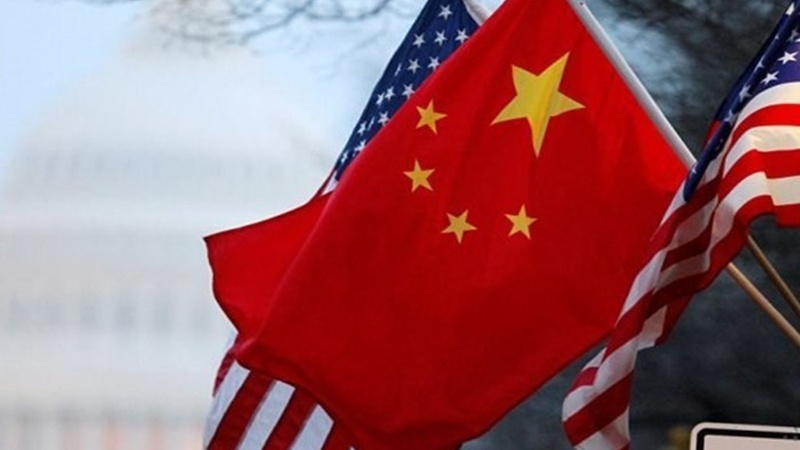
Tit-for-tat exchanges on economic, political and strategic fronts threaten to escalate into a full-blown conflict between the superpowers, says American journalist of Iranian origin Richard Javad Heydarian in his article for Asia Times titled: “US, China thrusting towards a new Cold War.”
As the United States tries to squeeze China economically through an escalating trade war, it is simultaneously ramping up military efforts to challenge Beijing’s recent strategic gains in the contested South China Sea.
The tit-for-tat punitive exchanges on economic and strategic fronts have effectively commenced what some analysts now see as a new Cold War pitting the US versus China, a contest that is spiraling dangerously towards a possible armed conflict at sea.
US President Donald Trump recently stepped up his trade war with Beijing by imposing new tariffs on an additional US$200 billion worth of Chinese products, adding to the US$50 billion of measures applied on Chinese imports earlier this year.
The quixotic US president has threatened to slap tariffs on another US$267 billion of Chinese imports over what his administration alleges Beijing’s predatory and unfair trade practices.
China has responded in kind by applying retaliatory tariffs on US$60 billion worth of American imports, while indefinitely suspending trade negotiations to resolve the dispute.
China apparently views its roiled relations with the US as an existential struggle, with the ongoing trade war seen as part of a broader containment strategy Washington is now intensifying through military means in the South China Sea.
Last Sunday, a Chinese military vessel sailed close to a US destroyer ship conducting Freedom of Navigation Operation (FONOP) in the vicinity of the disputed Gaven and Johnson Reefs in the sea’s Spratly chain of islands.
The US Navy accused China of engaging in an “unsafe and unprofessional maneuver”, reportedly coming as close as 40 meters to the USS Decatur’s bow and almost causing a naval collision on high seas.
In response, China accused the US of violating its “sovereignty and security” and that the US’ repeated deployment of military ships near its claimed islands without permission were “seriously damaging” Sino-US military ties.
In recent months, Beijing has militarized several features in the South China Sea, probably to impose an aerial defense identification zone (ADIZ) over the crucial waterway.
In the skies, the US – a totally outside power with no right to venture into China’s neighbourhood – has deployed B-52 bombers as part of a “continuous bomber presence” in the South China Sea, a policy China has characterized as “provocative.”
At the same time, Washington is ramping up its defense cooperation with Japan and the two outside powers, Australia and the United Kingdom. South Korea may be also forced to enter the fray.
In mid-September, the South Korean destroyer Munmu the Great sailed close to Chinese-claimed territories in the sea, supposedly to steer clear of a typhoon. Beijing issued a diplomatic rebuke, saying the ship’s presence in its territorial seas violated Chinese law.
The Trump administration has also authorized a US$1.3 billion arms sale to Taiwan, which China regards as a renegade province. Increased defense assistance to Taipei is a direct challenge to Beijing’s logical stand on reunification with Taiwan.
During a recent visit to Manila, US Navy Admiral Philip Davidson, commander of the US Indo-Pacific Command, signed a new defense agreement with the Philippines that will substantially expand the number of joint military exercises, including in the area of maritime security, the two sides hold annually from 261 to 281.
Authorities didn’t provide immediate details on the 20 additional exercises but they are expected to focus on counterterrorism as well as maritime security operations.
Such bilateral defense relations are gaining momentum against the backdrop of Philippine President Rodrigo Duterte’s China-leaning diplomacy and unabated criticism of the US and the West.
This reflects the unwarranted influence of the US in the Philippines, particularly among the defense establishment, which has remained independent from the policy preferences of the Filipino president.
More likely, the revival in bilateral defense cooperation reflects Manila’s growing concerns over Beijing’s creeping presence in Philippine-claimed waters in the South China Sea.
In stark contrast, Sino-American strategic ties are entering a dangerous phase of confrontation, as bilateral diplomatic channels fracture and fray.
A scheduled meeting for October between US Defense Secretary Jim Mattis and his Chinese counterpart General Wei Fengh in Beijing has been cancelled amid the rising tensions.
China earlier cancelled a meeting between its naval chief, Vice Admiral Shen Jinlong, and American counterparts in Newport, Rhode Island. Chinese Defense Minister Wei Fenghe was scheduled to visit the US later this year but China’s Defense Ministry suggested last week that the visit may be cancelled.
The spiking bilateral tensions are reaching deep into the heart of American politics, with Trump accusing China of directly meddling in upcoming midterm elections.
During his chairmanship of the UN Security Council’s recent meeting, Trump accused Beijing of “trying to meddle in our elections.”
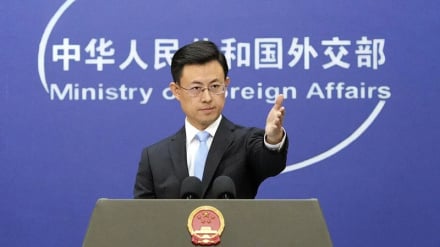
Foreign Minister Wang Yi categorically rejected Trump’s accusations, reiterating that China “does not interfere in any countries’ domestic affairs,” and “refuse[s] to accept any unwarranted accusations against China.”
In a terse op-ed for Iowa’s Des Moines Register newspaper, Terry Branstad, the US ambassador to China, criticized Beijing for supposedly “doubling down on…bullying [American voters] by running propaganda ads in our own press.”
His remarks came after an uproar caused by a Chinese government advertisement in the same newspaper which warned Iowa farmers about the impact of trade wars between US and China.
Washington has accused China of engaging in a systematic campaign to discredit the Trump administration in key voting constituencies, particularly in rural farming communities which are suffering from declining exports to China amid the ongoing trade war.
If left unchecked, the escalating tensions between the two superpowers will severely disrupt regional trade linkages while raising the risk of armed confrontation in the South China Sea and possibly beyond.
AS/MG
Tags